
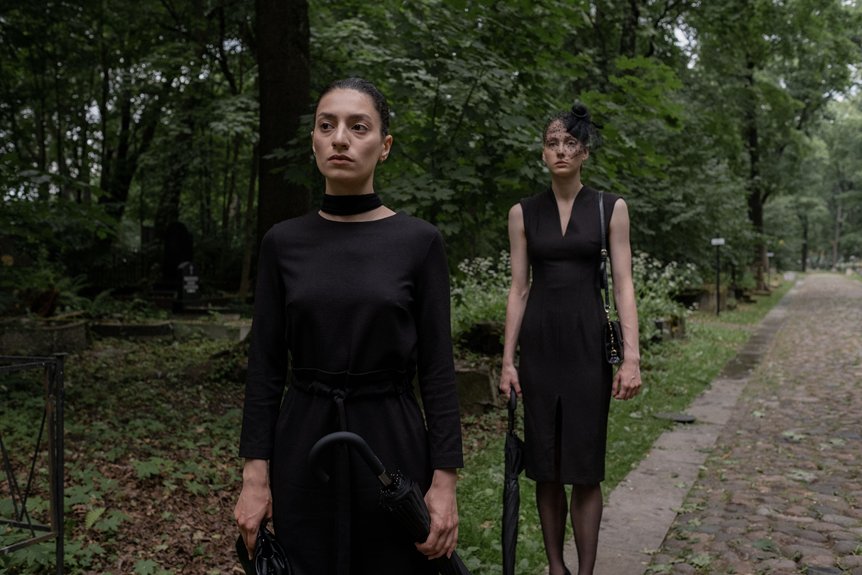
Funeral attire communicates respect when words fall short. Dark colors, such as black, navy, and charcoal, signal solemnity without drawing unnecessary attention. Choose a modest outfit: tailored pants or knee-length skirts, crisp shirts, and polished dress shoes. Avoid sneakers, bright patterns, and flashy jewelry, as these undermine the solemnity of the occasion. Keep accessories minimal and coordinated.
Whether you’re attending a traditional service or celebration of life, the principle remains constant: dress to honor the deceased, not yourself. Attending to these details will help you navigate this moment with appropriate decorum.
Why What You Wear Matters at a Funeral
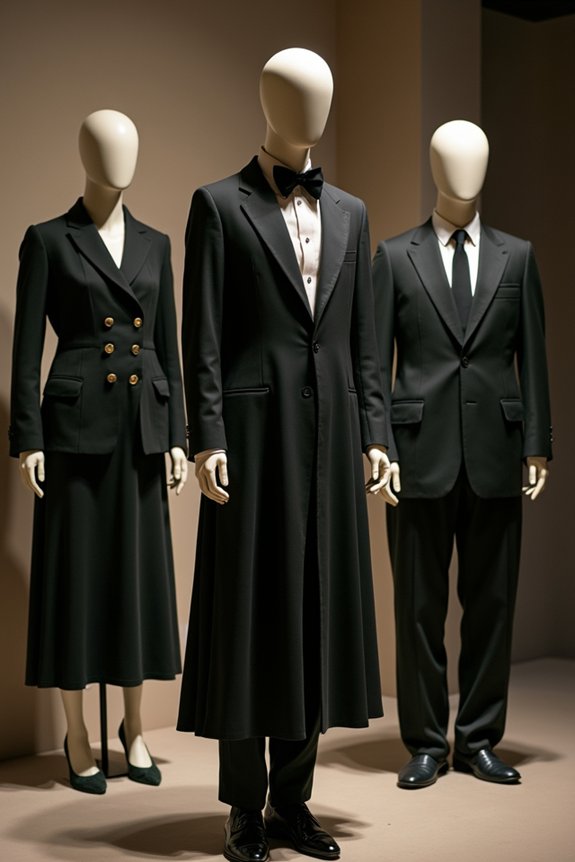
Why does it matter what you wear to a funeral? Your funeral attire communicates respect for the deceased and shows the grieving family you understand the occasion’s gravity. What you wear shapes how you feel and how others perceive your commitment to honoring someone’s memory.
The dress code isn’t about fashion; it’s about belonging to a community gathered in shared grief. When you dress conservatively in dark, muted tones, you’re saying, “I’m here to support you, not draw attention to myself.” This matters because funerals demand focus on remembrance, not personal style.
Your clothing choices demonstrate maturity and emotional intelligence. By following traditional, modest dress codes, you acknowledge that some moments transcend everyday life and require us to dress with intention and dignity.
Traditional Funeral Attire: Dark Colors, Modest Cuts, and Core Principles
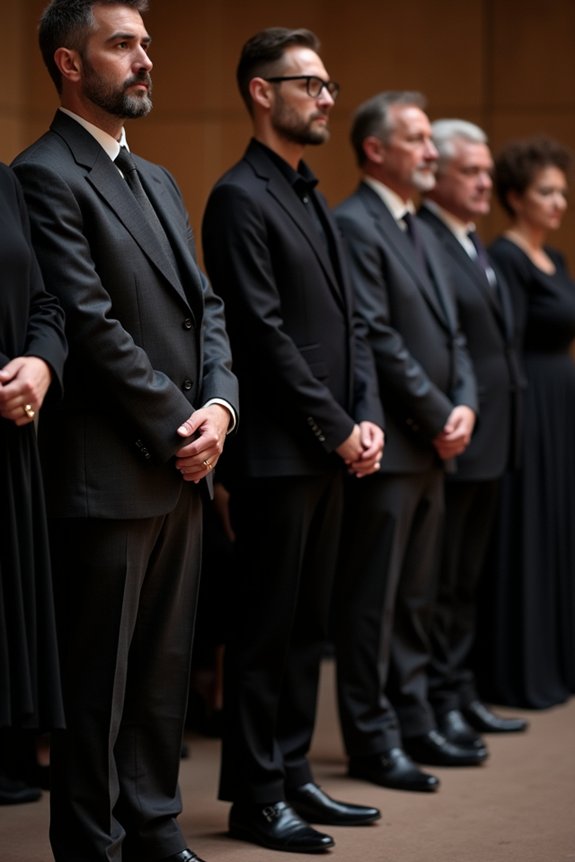
The foundation of respectful funeral dress rests on three core principles: dark colors, modest cuts, and understated elegance. Black, navy, or charcoal gray serve as more than fashion choices; they function as silent statements of respect. Choose modest cuts that avoid drawing attention to yourself.
Men should wear dark suits with crisp white shirts and conservative ties. Women can select knee-length dresses, skirts, or tailored pantsuits. Bright colors, loud patterns, and anything too tight or revealing have no place at a funeral service. Polished dress shoes maintain formality and compose your overall appearance.
Minimal accessories preserve the focus on honoring the deceased rather than showcasing your outfit. Shoes deserve attention as well; well-maintained dress shoes keep things formal and grounded. The goal of traditional funeral attire is straightforward: it allows you to blend in while demonstrating that you care about the moment and the person being remembered.
Dress Code Shifts: Traditional vs. Memorial Services vs. Celebrations of Life
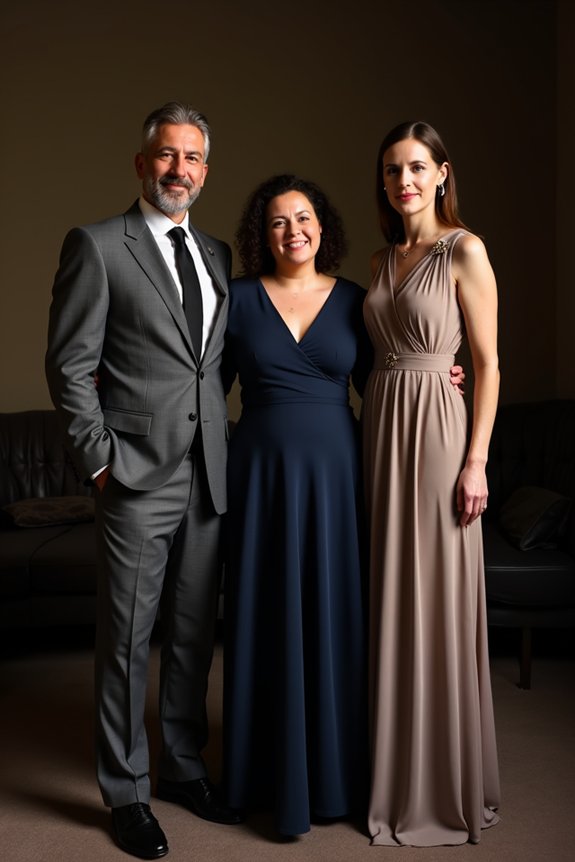
Understanding how dress codes shift across different service types matters when you’re preparing to attend. Traditional funerals demand the formal approach covered earlier, but memorial services and celebrations of life often give you more flexibility in color, formality level, and personal expression while still honoring the deceased. Here’s how each one differs so you can dress appropriately for whatever service you’re attending.
Traditional Funeral Service Formality
How you dress for a funeral matters more than you might think, and it’s worth understanding the differences between traditional services, memorial gatherings, and celebrations of life.
For traditional funerals, you’ll want to embrace formal attire in dark colors. Black, navy, and charcoal convey respect and solemnity. Men should wear dark suits with conservative cuts, while women opt for knee-length dresses or skirts paired with blouses. Polish your dress shoes and keep accessories minimal. This isn’t your moment to draw attention.
| Clothing Item | Traditional | Memorial Service |
|---|---|---|
| Color Palette | Black, Navy, Charcoal | Softer hues allowed |
| Footwear | Polished dress shoes | Formal shoes |
| Accessories | Minimal, understated | Slightly more personal |
Avoid jeans, sneakers, and bright patterns. Your funeral dress code communicates a clear message: you’re there to honor this person. Your clothing choices reflect that intention and respect.
Memorial Service Styling Options
Where traditional funerals demand unwavering formality, memorial services offer more flexibility in how you dress. You’re not abandoning respect; you’re simply taking a gentler approach.
Memorial services allow semi-formal dress, so you can explore subdued colors beyond black. Consider navy, charcoal, soft gray, or muted burgundy. You might add subtle patterns or textures that traditional funerals would discourage. For women, knee-length dresses with delicate blouses work well. Men can wear blazers with dress pants and skip the tie if preferred.
The shift feels natural because you’re still honoring the deceased while acknowledging that some families prefer warmth over strict formality. Always check the family’s specific instructions first. Their preferences serve as your guide.
Celebration Of Life Attire
Moving beyond the formality of traditional funerals and memorial services, celebrations of life invite you to embrace a completely different energy. Funeral attire for these occasions shifts dramatically; you’re encouraged to wear semi-formal clothes that reflect the deceased’s personality rather than strict black ensembles.
Think smart-casual elegance: tailored pants with a nice blouse, a blazer paired with chinos, or a tasteful dress in colors that mattered to them. You might add meaningful accessories, such as a favorite color accent, a pin representing their hobby, or jewelry they’d have loved.
The key is balancing comfort with respect. Skip jeans and athletic wear entirely. Your goal is showing up authentically while honoring their memory through celebration of life attire that feels personal and respectful to everyone gathered.
What Men Should Wear to a Funeral
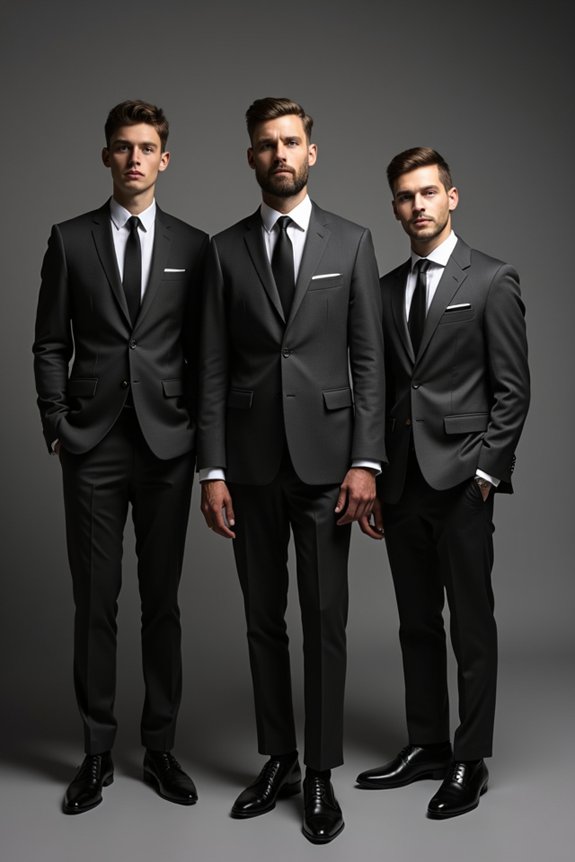
The dark suit, whether black, navy, or charcoal, remains your safest choice for funeral attire because it conveys respect without demanding attention. A conservative dress code matters here since it honors the occasion and those grieving.
Pair that suit with a white or light-colored dress shirt and a simple tie. Skip the flashy jewelry and keep accessories minimal; think a plain belt only. Your shoes matter too: polish black oxfords or brogues, never sneakers.
If you don’t own a full suit, a dark blazer with dress pants works respectfully. Just avoid jeans and short sleeves entirely. Consider the weather when choosing fabric weight. This isn’t about perfection; it’s about showing up appropriately for someone you care about.
What Women Should Wear to a Funeral
How do you strike that balance between honoring the occasion and feeling comfortable in your own skin?
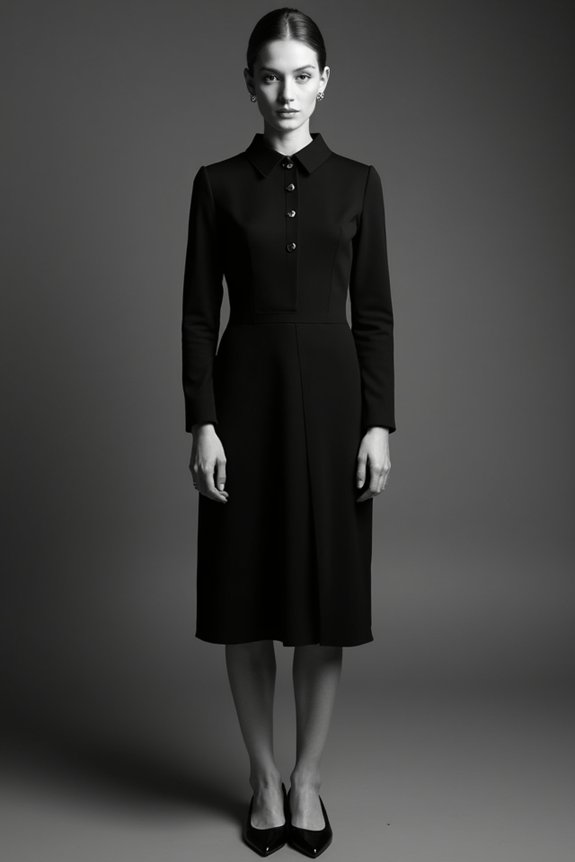
Funeral attire for women centers on understated elegance. Choose a modest dress or skirt reaching your knees, or pair smart trousers with a conservative blouse. Dark colors (black, navy, charcoal) serve as your foundation because they convey respect without demanding attention.
Funeral attire for women emphasizes understated elegance: modest knee-length dresses, smart trousers, and dark colors that convey respect without demanding attention.
Layer thoughtfully with a cardigan or blazer for polish and warmth. Closed, smart footwear grounds your look professionally. Keep accessories minimal; delicate jewelry works better than statement pieces.
Avoid jeans, casual fabrics, and bright patterns. Your goal isn’t invisibility but rather showing respect through restraint. When you dress this way, you’re saying: “I’m here to support this family, not draw focus to myself.” That’s the heart of respectful funeral attire.
No Formal Clothes? How to Build a Respectful Outfit From Basics
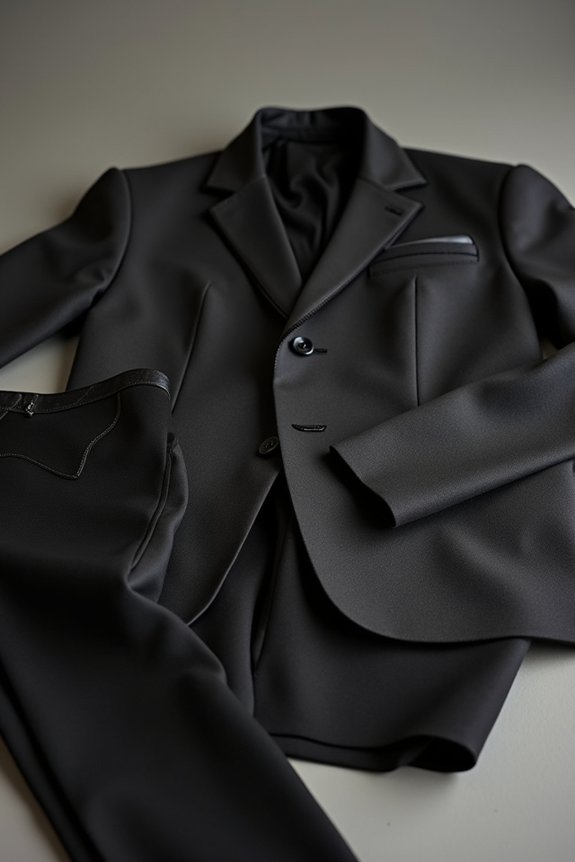
Not everyone owns a closet full of formal wear, and that’s perfectly fine. I’ve been there, scrambling to build funeral attire from basics. Here’s what I’ve learned: start with dark dress pants in black or navy, which work well for this purpose. Pair them with a dark dress shirt, then add a blazer to elevate the look immediately. This combination creates respectful clothing without requiring a full suit.
Next, focus on shoes. Polish black or dark brown dress shoes finish your outfit professionally. Skip sneakers entirely. Add a simple belt for cohesion.
When building an outfit from basics, remember that solid colors matter. Avoid jeans, graphic tees, and anything casual. Choose modest tops with higher necklines and longer sleeves. Keep accessories minimal; include only essentials.
Your funeral attire doesn’t need to be expensive. It needs to be thoughtful and appropriate for this solemn occasion.
Non-Black Funeral Attire: Hindu, Sikh, African, and Other Traditions
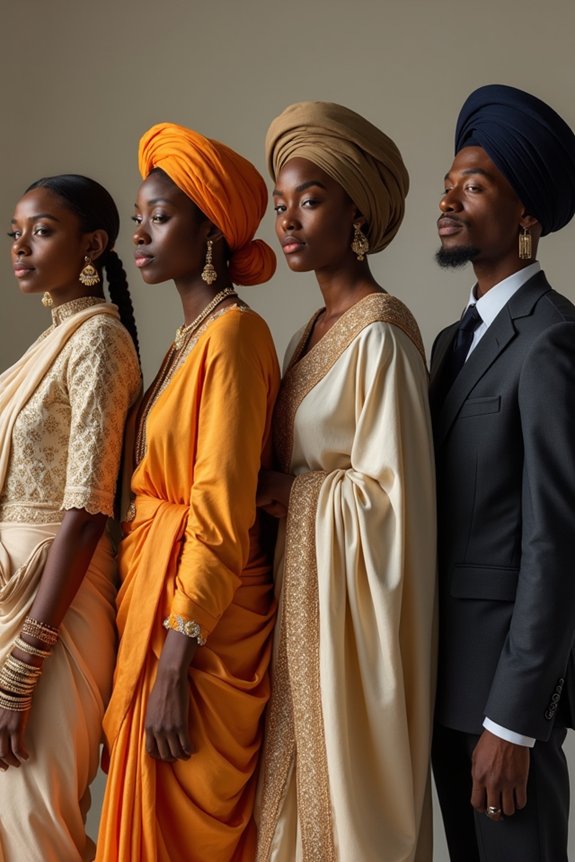
When you’re attending a funeral outside your own cultural tradition, should you automatically wear black? Not necessarily. Non-black funeral attire honors many meaningful cultural traditions across the world.
Respectful choices include:
- Hindu and Sikh mourners wear white, symbolizing purity and spiritual respect
- African traditions may call for red during specific family rituals
- Thailand and Brazil incorporate purple or deep tones in their practices
- Subdued, solid colors work universally when you’re uncertain
The best approach is to ask a family member or religious leader beforehand. This simple step shows respect for their customs. Your funeral attire should reflect the deceased’s cultural heritage, not your assumptions. When you prioritize understanding over convention, you honor their memory and participate respectfully in their community’s grieving process.
Dressing Children and Toddlers: Age-Appropriate Guidance
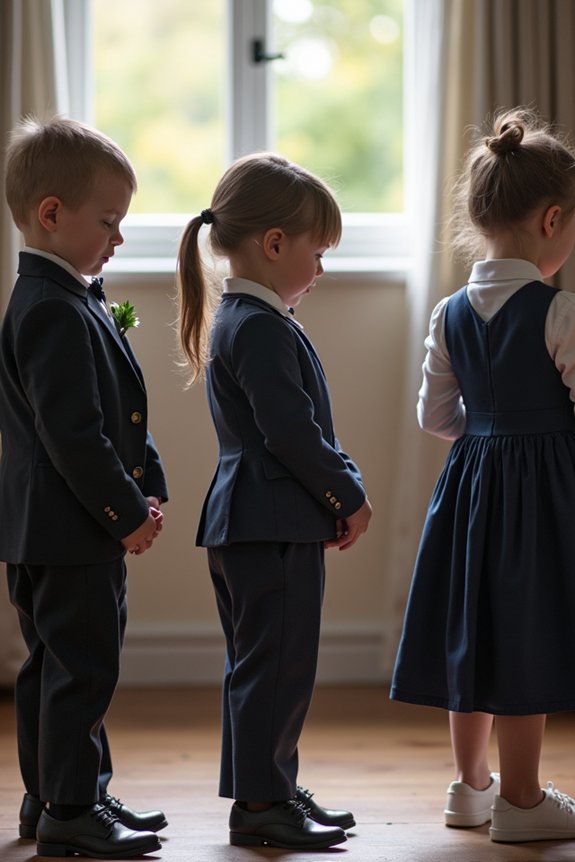
Most children benefit from smart, dark clothing that balances respect with comfort. This matters more than many people realize at a funeral. Dark trousers paired with a plain top and jumper work well for kids, while dark skirts with cardigans offer another polished option. For toddlers, choose plain dark clothing based on what keeps them comfortable and practical throughout the service.
Seasonal adjustments matter too. Summer calls for dark floaty skirts or dresses with modest plain tops, while winter requires dark coats, jackets, and scarves for weather-appropriate warmth. Supportive, smart shoes matter more than flashy sneakers.
Avoiding bright colors and accessories keeps the focus on what matters: showing respect while letting children feel secure and appropriately dressed for this meaningful occasion.
Graveside Services: Practical Clothing for Outdoor Settings
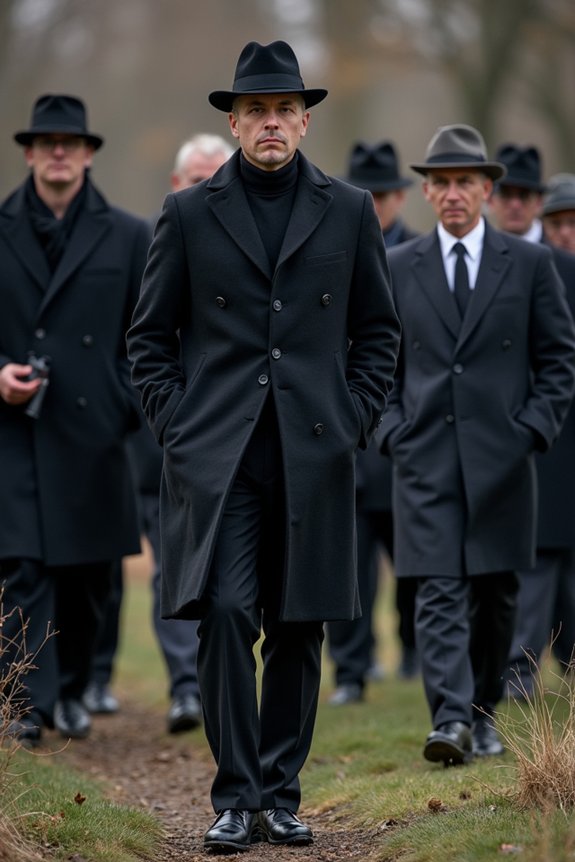
Outdoor graveside services demand a different approach than indoor ceremonies, and experience teaches valuable lessons about what works. You’re standing outside, exposed to elements, so practical choices matter as much as respectful ones.
Dark, modest clothing that functions in unpredictable weather serves best. Look for pieces that won’t distract from the moment while protecting you from the conditions.
Sturdy footwear like polished dress shoes handles uneven terrain without slipping. Ground conditions at gravesites vary considerably, and solid footing keeps your attention where it should be.
Layering pieces such as blazers or lightweight coats prepare you for temperature shifts. Weather can change quickly outdoors, and having an extra layer prevents discomfort.
Understated accessories like simple watches or belts work well. Skip flashy jewelry that draws attention away from the service itself.
Check the forecast beforehand, then bring that cardigan anyway. Sunshine predictions change, and outdoor conditions shift faster than you’d expect. Your funeral attire should balance dignity with comfort because you’ll focus better when your feet are stable and your body isn’t shivering.
Graveside services aren’t about looking perfect. They’re about honoring someone while taking care of yourself practically. The clothes you choose should support you through the experience, not distract from it.
Summer Funerals: Staying Cool While Maintaining Formality
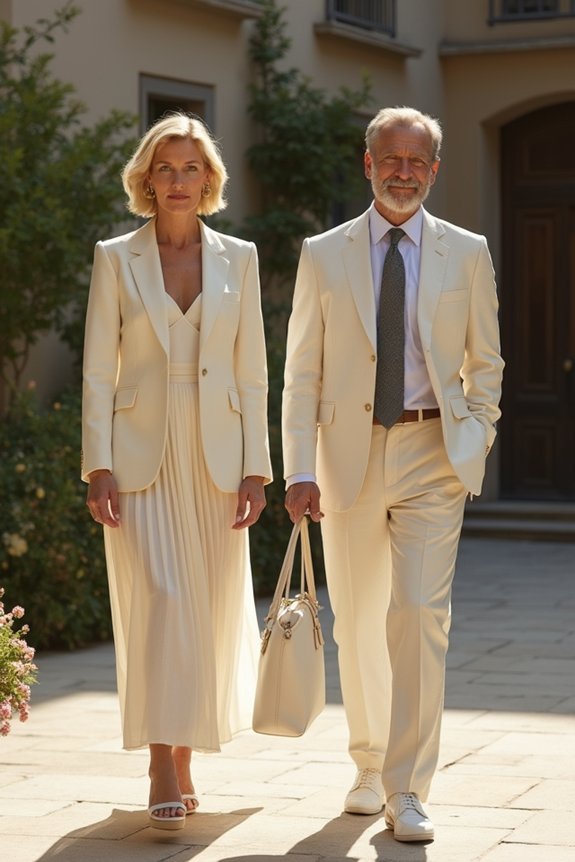
I’ve found that summer funerals demand smart fabric choices. Cotton and linen blends let your skin breathe while keeping you looking appropriately somber and put-together. Layering becomes your practical tool in outdoor settings; I typically wear a lightweight blazer or shawl that I can remove if the heat becomes unbearable, maintaining dignity without sacrificing comfort. The goal here isn’t just staying cool, it’s showing respect while actually being able to focus on what matters most during the service.
Lightweight Fabric Choices
When you’re attending a summer funeral, you face a genuine challenge: honoring the occasion with formal attire while keeping yourself comfortable in the heat. Lightweight fabrics are essential for this balance.
Cotton blends offer breathable comfort without sacrificing formality. Linen blends provide excellent airflow and natural moisture management. Lightweight wool keeps you looking sharp while staying cool. Moisture-wicking underlayers work invisibly beneath dark outer garments.
The key is choosing darker colors; navy, charcoal, or black maintain that somber tone while remaining breathable. Looser, modest cuts prevent clingy fabrics from adhering to you during emotional moments. Your summer funeral attire doesn’t have to feel stifling.
With the right fabric choices, you’ll feel composed and respectful. That matters most when you’re supporting loved ones through difficult times.
Layering For Outdoor Services
How do you stay dignified in summer heat when you’re standing graveside for hours? Layering is an effective strategy for funeral attire at outdoor services.
Start with a lightweight, breathable base, such as a short-sleeve modest top. Then add a lightweight blazer or cardigan you can remove if temperatures climb. This approach lets you adapt without looking disheveled.
Bring a thin wool or cotton coat as backup. You’ll appreciate it if the service moves into shade or evening cools things down. The key is preparing for temperature swings while maintaining formality.
Choose closed-toe breathable shoes for grass and uneven ground. They’re practical yet respectful.
Layering makes outdoor services more manageable, allowing you to focus on what matters: honoring the departed with dignity and presence.
Winter Funerals: Layering, Warmth, and Weather-Appropriate Choices
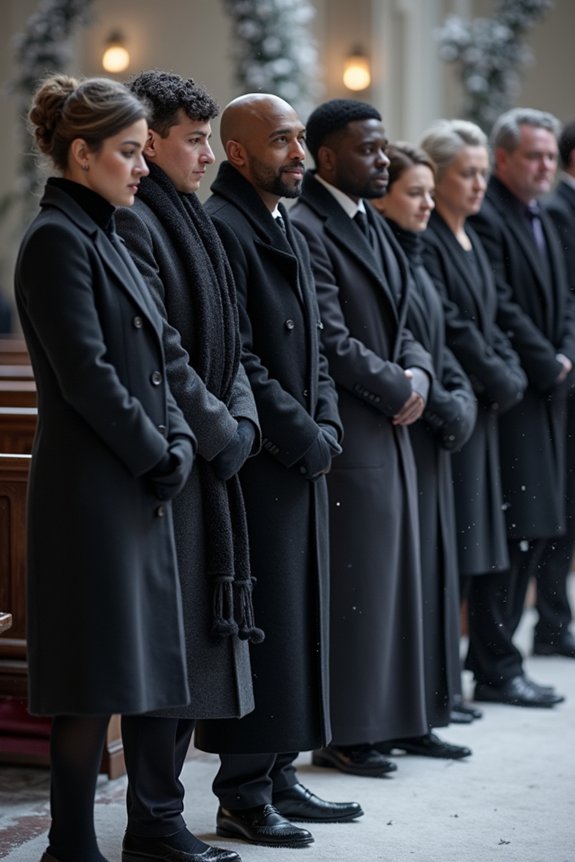
Dressing appropriately for a winter funeral requires thinking strategically about layers, fabric weight, and how you’ll move between outdoor cold and heated indoor spaces. This balance matters significantly.
What to wear:
- Wear dark, tailored layers like a black wool coat over a dress or blouse with trousers
- Choose thicker, non-shiny fabrics (wool blends, heavyweight cotton) that provide insulation without looking casual
- Add weather-appropriate accessories: knee-length coat, scarf, and gloves in dark colors
- Select closed-toe dress shoes in black or dark brown, paired with insulated socks
The strategy involves planning layering that lets you remove pieces indoors while maintaining a formal appearance. A cardigan under your coat works well for this purpose. You’ll feel comfortable, respectful, and fully present during this important gathering.
Shoes, Jewelry, and Accessories: The Details That Complete Respect
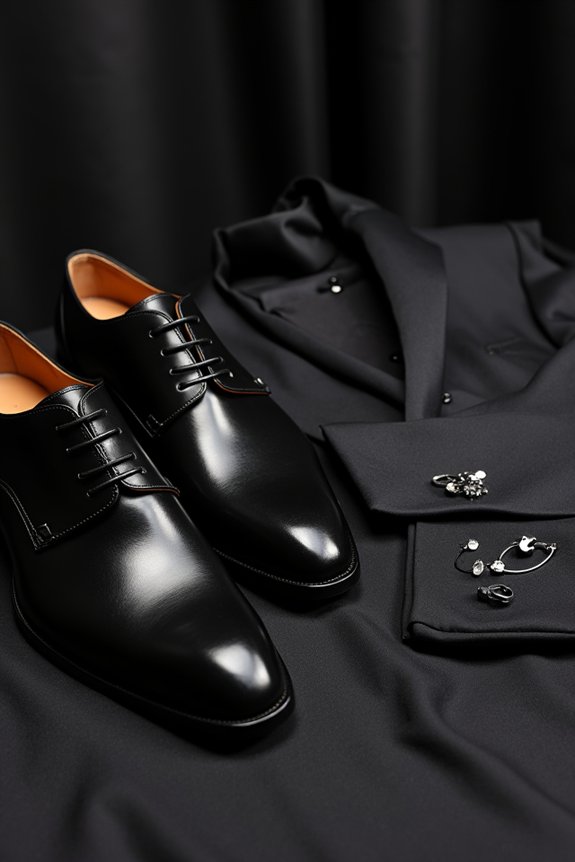
When you’re getting dressed for a funeral, the smaller details—your shoes, jewelry, and accessories—speak volumes about your respect for the occasion. You’ll want to focus on understated elegance: polished black oxfords, minimal jewelry, and dark, muted accessories that won’t distract from honoring the person you’ve lost. These finishing touches may seem small, but they form the foundation that shapes your entire look into one that’s appropriate and respectful.
Footwear Choices And Selection
Why do so many people overlook their shoes when preparing for a funeral? I’ve seen it happen countless times: folks focus on their outfit’s top half and neglect what’s below. Your footwear speaks volumes about respect.
What matters most:
- Black shoes or dark brown dress shoes establish immediate formality and dignity
- Closed-toe styles (oxfords and loafers) work best for graveside standing
- Polished, understated designs without flashy details show genuine reverence
- Comfortable flats or low heels sustain you through lengthy ceremonies
Choose black dress shoes first. They’re versatile, appropriate, and they simply work. Women might prefer sensible flats for outdoor terrain. Skip sneakers entirely; they undermine the solemnity you’re trying to convey. Your shoe choice isn’t vanity. It’s your silent statement of respect and belonging in this difficult moment.
Jewelry And Accessory Guidelines
Your shoes set the foundation, and now we’re talking about the details that either amplify or diminish that respect you’ve worked to establish. I’ll keep this straightforward: less is more here.
For jewelry, think minimal and simple. Skip the flashy pieces, the chunky rings, the statement necklaces. A modest watch, a simple band, maybe cufflinks. That’s your lane. These understated choices whisper respect rather than shout for attention.
Your accessories deserve equal consideration. Dark belts, subdued ties, muted scarves should blend seamlessly with your outfit, not compete for focus. Everything coordinates quietly.
Here’s something I’ve found meaningful: consider attaching a tiny photo of the deceased to your jacket as a remembrance. It’s personal, respectful, and keeps their presence close without being obvious.
The goal? Let your appearance honor the moment, not overshadow it.
Completing The Respectful Look
The final polish on funeral attire lives in the details: shoes, jewelry, and accessories that either anchor your respect or undermine it.
I’ve learned that what you wear below the neckline matters just as much as your outfit. Here’s what I’ve found works:
- Shoes: Choose formal, dark oxfords or loafers that are clean and polished
- Jewelry: Keep it minimal and simple; avoid anything flashy or attention-grabbing
- Belts and ties: Select dark, subdued styles that blend seamlessly with your ensemble
- Functional pieces: Consider a modest watch or small pin to maintain the solemn atmosphere
When you’re uncertain, embrace restraint. A modest approach preserves the ceremony’s dignity and shows you prioritize the occasion over self-expression. You’re supporting the family and honoring the departed through thoughtful, understated choices.
6 Funeral Outfit Mistakes That Undermine Respect
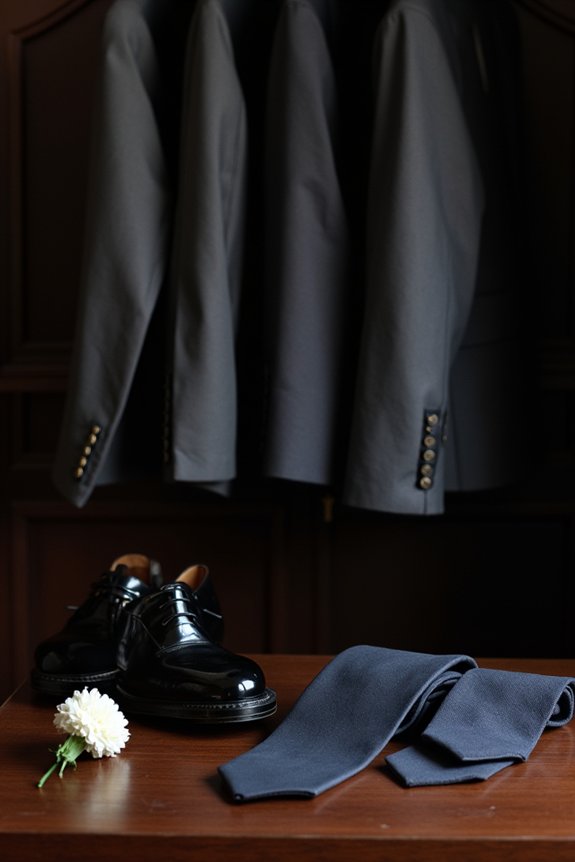
How many times have I seen someone show up to a funeral in jeans and sneakers, completely unaware they’d just communicated carelessness about the occasion?
I’ve learned that funeral attire mistakes ripple outward, affecting how we’re perceived during vulnerable moments. Here are six critical missteps to avoid:
- Wearing casual clothing like jeans undermines respect for the deceased
- Choosing bright colors or loud patterns steals focus from the service
- Sporting flashy jewelry distracts mourners and feels tone-deaf
- Selecting sneakers instead of polished dress shoes signals disrespect
- Ignoring modesty with revealing or tight-fitting outfits shows poor judgment
- Overlooking family dress code instructions creates unnecessary tension
Your funeral attire choice isn’t about fashion; it’s about honoring someone who mattered. When you align with the dress code and choose conservative, modest clothing, you communicate a clear message: “This matters to me, and you mattered to me.”
Edge Cases: Tattoos, Piercings, Glasses, and Other Concerns
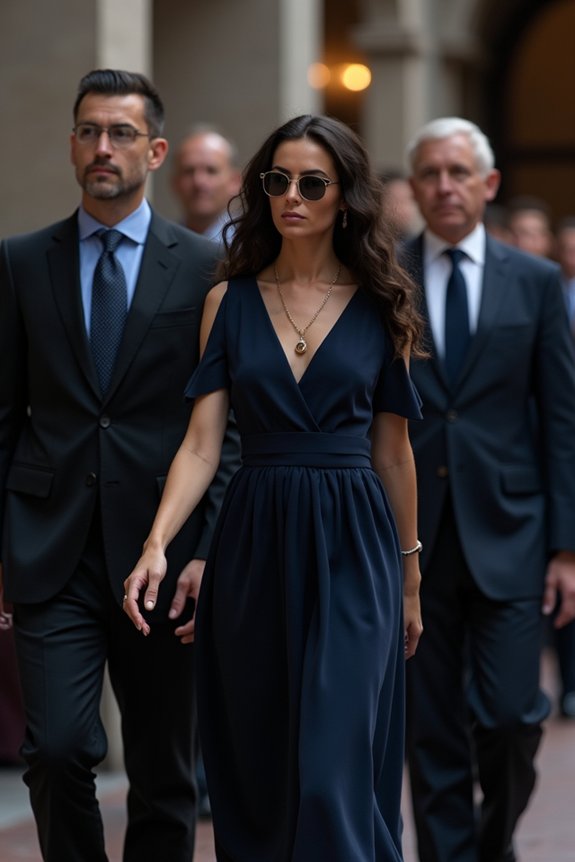
Beyond the obvious wardrobe choices, I’ve noticed people wrestle with questions that don’t fit neatly into standard funeral etiquette. Here’s what I’ve learned from navigating these tricky situations:
Beyond the obvious wardrobe choices, people wrestle with questions that don’t fit neatly into standard funeral etiquette.
- Tattoos: Cover visible ink with long sleeves or higher necklines when possible. This shows respect for diverse cultural expectations at traditional services.
- Piercings: Keep jewelry minimal and unobtrusive. Skip the flashy statement pieces; simple studs work perfectly.
- Glasses: Clean lenses matter. Avoid reflective glare during photos or livestreams by positioning yourself thoughtfully.
- Other accessories: Prioritize modesty in your overall presentation. Dial back visible body modifications when you’re unsure.
The rule I follow is simple: when doubt creeps in, choose conservative coverage. Ask the family about dress codes beforehand. They’ll appreciate your consideration, and you’ll feel confident you’ve shown proper respect.
Pre-Funeral Outfit Checklist: Confirm Your Choices Before You Go
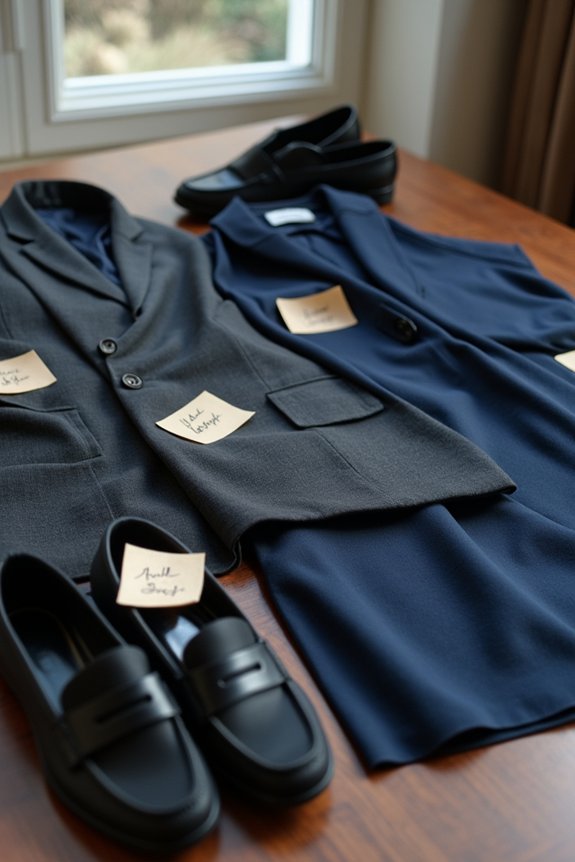
When’s the last time you actually asked about dress code before showing up somewhere important? A quick pre-visit checklist prevents awkward moments and lets you focus on what matters: honoring the deceased.
Here’s my pre-funeral outfit checklist:
- Confirm the service type with family or the funeral home to determine your funeral attire approach
- Verify dress code expectations through cultural or religious customs that might influence your choices
- Check the weather and plan layering with a blazer or coat for comfort
- Review your outfit against these standards: dark colors, modest hemlines, polished closed-toe shoes, minimal accessories
- Test-wear everything beforehand to check that nothing’s wrinkled or uncomfortable
Taking five minutes now prevents regret later. You’ll walk in confident, respectful, and fully present for the service.