
Most men wear pajamas, boxers with a t-shirt, or sleep naked, and your choice matters for sleep quality. What you wear directly impacts how fast you fall asleep and how refreshed you feel tomorrow. The key is matching your sleepwear to your body’s temperature tendencies. Cotton breathes well for hot sleepers, while thermal sets keep cold sleepers warm.
About 74% prefer pajamas for comfort and coverage, though 21% sleep nude successfully. Your best option depends on what makes you comfortable, not what’s “normal.” Consider which setup works best for your specific needs.
Why Sleepwear Matters: Temperature, Comfort, and Sleep Quality
Have you ever noticed how you’ll fall asleep faster in the right pajamas? Sleepwear does far more than cover your body. It actively regulates your temperature, which directly impacts sleep quality. When you wear clothes that fit just right, not too tight or loose, you sleep deeper and wake refreshed. Your brain needs signals that bedtime has arrived. Comfortable pajamas send that message.
During colder months, the benefits multiply. Proper sleepwear traps heat efficiently, keeping you cozy without overheating. Cotton T-shirts and shorts work well for warmer nights, while dedicated pajamas excel in winter. Your room’s conditions matter too. Matching your sleepwear to both your environment and personal preferences creates the foundation for restful sleep.
The connection is straightforward: the right pajamas support better temperature regulation, which leads to improved sleep quality. Consider your climate, your body’s natural warmth, and your personal comfort preferences when selecting sleepwear. This attention to detail pays off in better rest and more refreshing mornings.
How to Choose Sleepwear: Find Your Decision Framework
Now that you understand why the right pajamas matter for your sleep, let’s figure out what actually works for you. Your sleepwear selection depends on three core factors: what feels good against your skin, how well it manages your body’s heat, and whether you’ll actually wear it consistently.
| Option | Best For | Temperature | Comfort Level |
|---|---|---|---|
| Cotton pajamas | Everyday sleepers | Moderate regulation | High breathability |
| Boxer shorts only | Hot sleepers | Maximum airflow | Minimal restriction |
| Thermal sets | Winter months | Heat retention | Cozy warmth |
| No clothes | Temperature control | Optimal regulation | Personal preference |
Consider your bedroom climate first. Then prioritize comfort and fit; nothing should be too tight or loose. Test different combinations until you discover what lets you sleep deeply without disruption.
Pajamas for Better Sleep
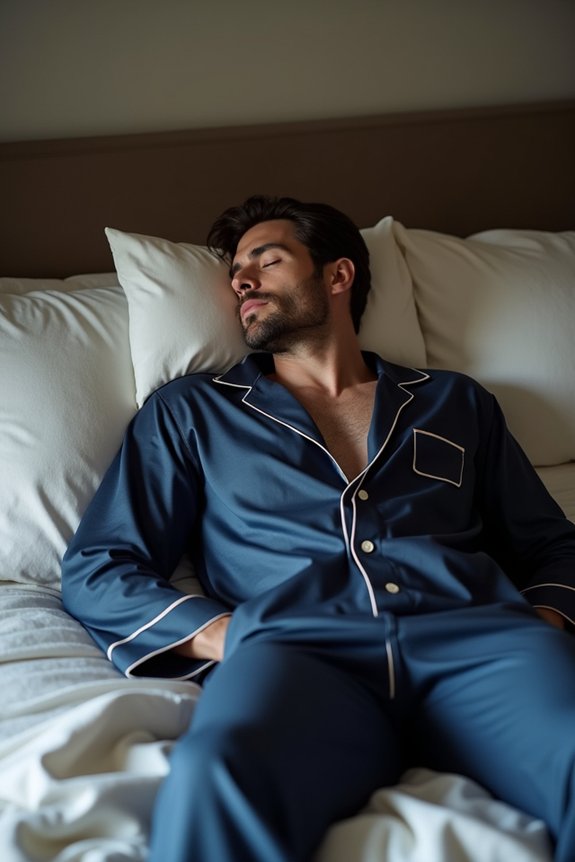
The right pajamas do more than just cover your body; they’re your ticket to deeper, more restful sleep. Proper sleepwear changes how you rest at night. Cotton pajamas breathe well, keeping you cool without overheating. The fit matters tremendously: too tight restricts movement, too loose leaves you tangled and frustrated. Finding that sweet spot ensures comfort throughout the night.
Your sleepwear routine signals your brain that bedtime’s approaching. When you slip into familiar pajamas, your mind recognizes the transition from day to sleep. This consistency helps you fall asleep faster and sleep deeper. Temperature regulation through fabric choice becomes important during colder months, so consider heavier materials then. You’re investing in yourself when you prioritize quality pajamas.
Boxers and T-Shirts: The Minimalist Approach
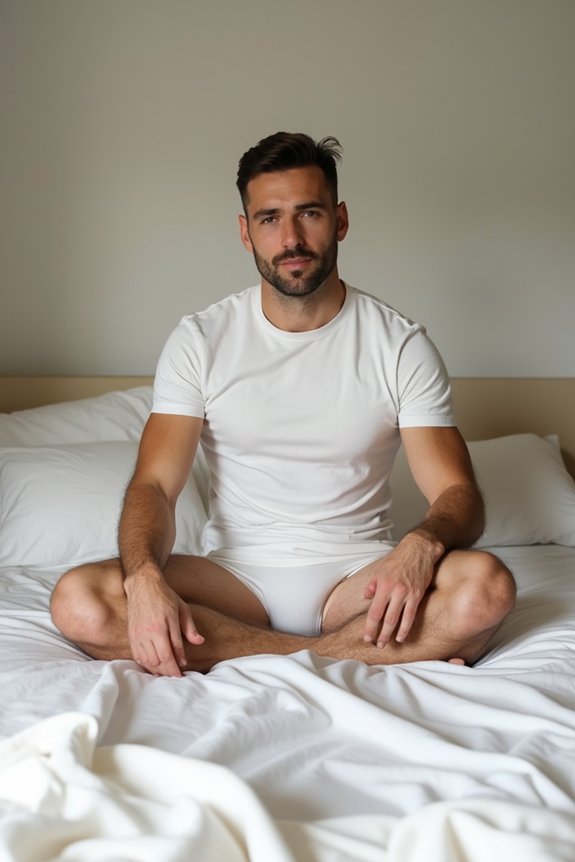
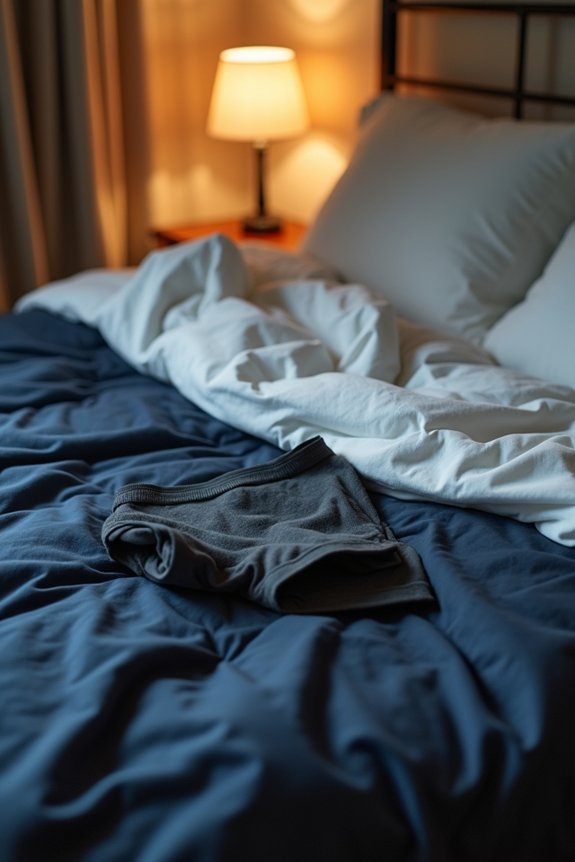
Why complicate bedtime when simplicity works? I’ve found that boxers and a T-shirt deliver everything you need for quality sleep. This minimalist combo balances comfort and breathability without overthinking your nighttime routine.
Here’s what matters: choose boxers that fit well, not too tight and not too loose. Tight pairs disrupt sleep; loose ones shift around. Pair them with a basic T-shirt, and you’ve got a foundation that regulates temperature naturally.
You don’t need expensive pajama sets. A quality pair of boxers around £45 from brands like Hugo Boss works perfectly. Keep them clean and fresh.
This approach gives you comfort without the fuss. You’re investing in sleep quality, not elaborate ensembles. Strip away the unnecessary. What remains supports genuine rest.
Sleeping Naked: Temperature and Health Benefits
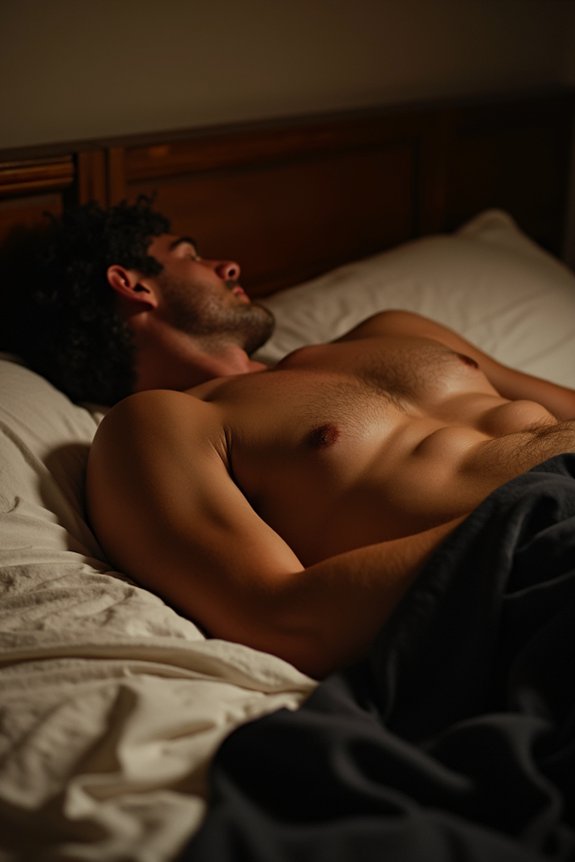
Have you considered what happens to your body when you remove all barriers between yourself and your sheets? When you’re sleeping naked, your body regulates temperature more effectively, and that matters for your rest. Here’s why: your skin breathes freely, heat dissipates naturally, and you’ll likely fall asleep faster. Better temperature regulation means better sleep quality overall.
I’ve found that ditching pajamas improves my nights significantly. Your body works less hard maintaining its ideal temperature, so you wake refreshed instead of tangled and sweaty. The air circulation prevents fungal issues too; that’s a genuine health benefit. Plus, if you’ve got a partner, skin-to-skin contact boosts oxytocin, deepening your connection.
This approach isn’t for everyone, but if comfort’s your priority, sleeping naked deserves serious consideration. Your sleep quality depends on it.
Socks to Bed: When Cold Feet Disrupt Sleep
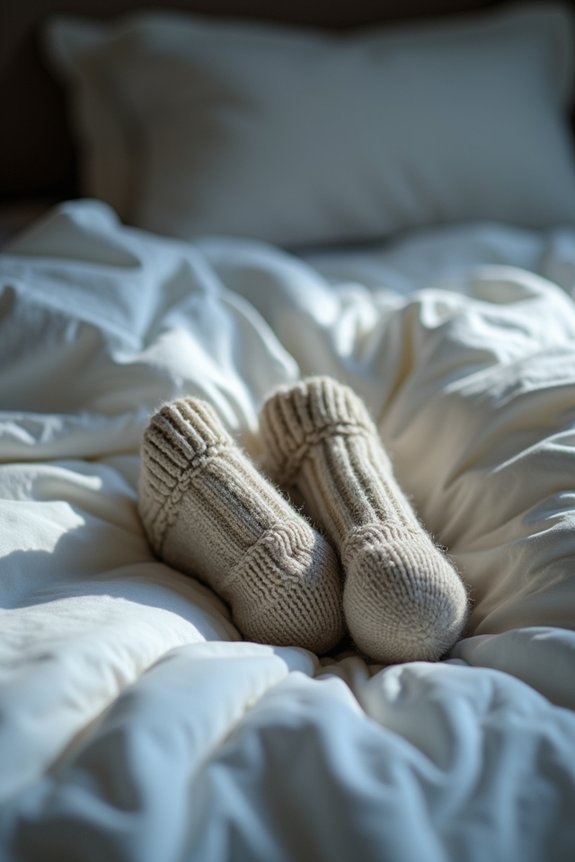
Now, if sleeping naked isn’t your style, or if your partner prefers you keep something on, cold feet might be your real problem. Loose, comfortable socks can improve sleep warmth without the downsides of tight compression types that kill circulation.
Here’s what works: lightweight socks that you can easily remove if you overheat. About 32% of us sleep in socks regularly, and there’s real science backing it. Warm feet trigger faster sleep onset and deeper rest because your body relaxes when extremities feel comfortable.
The key to sleep comfort is flexibility. Pair socks with your preferred blankets and room temperature. If you wake up sweating, simply slip them off. This simple adjustment improves sleep quality, especially during colder months.
Sleepwear for Hot and Cold Sleepers
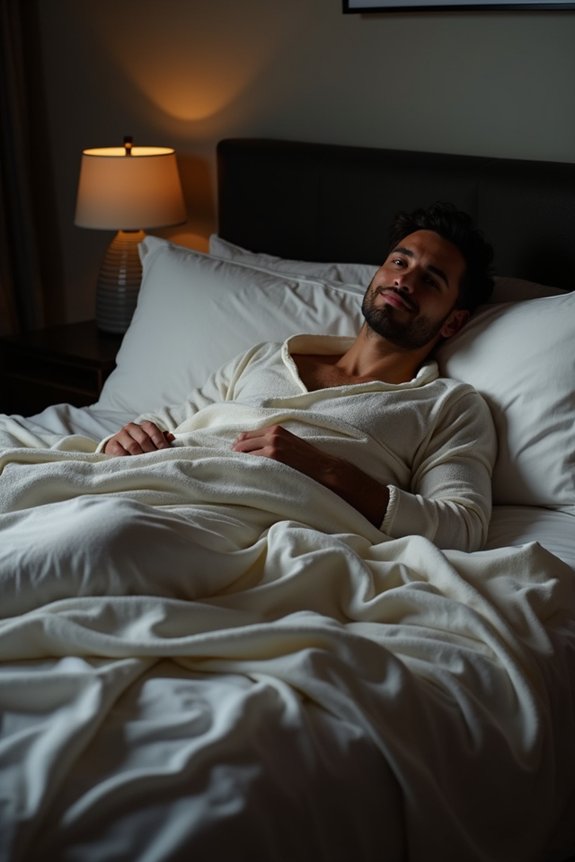
Finding your ideal sleepwear starts with understanding whether you’re a hot or cold sleeper, because what works for one person may leave another sweating or shivering all night. The material you choose matters significantly: breathable cotton for heat management, warmer fabrics for cold nights. These selections directly affect how quickly you fall asleep.
Experimenting to discover what your body actually needs is worth your time. Your personal preferences should guide your choices, so avoid limiting yourself to one style. Consider adjusting your sleepwear seasonally and based on your room temperature. What feels right in summer will differ from what serves you best in winter, and your selections should reflect those shifts.
Temperature Regulation Strategies
Why do some guys wake up drenched in sweat while others shiver through the night? The answer lies in understanding sleepwear and temperature regulation. Fabric choice matters significantly. Hot sleepers benefit from lightweight cotton or moisture-wicking blends that dissipate heat effectively. Cold sleepers need thicker, insulating materials that trap warmth.
Fit matters as much as fabric. Too-tight sleepwear restricts circulation and disrupts sleep quality, while baggy options fail to maintain consistent body temperature. Your choices should align with your room temperature and blanket use. During winter, layering strategically works well. Summer calls for minimal, breathable pieces.
Getting this balance right improves sleep quality substantially. You can find your ideal combination by experimenting with different fabrics and fits.
Material Choices Matter
The fabric you choose directly impacts your sleep comfort. The right material handles temperature regulation more effectively than any thermostat. Here’s what works:
- Cotton breathes naturally, keeping you cool during warm nights without trapping moisture
- Flannel and brushed cotton insulate effectively, perfect for cold sleepers needing warmth
- Moisture-wicking blends pull sweat away, preventing those uncomfortable middle-of-the-night wake-ups
- Layering different fabrics lets you adjust comfort as temperatures shift throughout the night
Your fabric selection directly affects sleep quality. Hot sleepers need breathable materials that release heat quickly. Cold sleepers benefit from thicker, insulating fabrics. Once you find your fabric match, you’ll sleep deeper and wake refreshed.
Personal Preference Adjustments
How you sleep at night depends less on what you wear and more on matching your sleepwear choices to your body’s natural temperature tendencies. I’ve learned this through years of restless nights.
If you run hot, lightweight cotton or moisture-wicking fabrics work well for you. They’ll keep you cool and comfortable, preventing that frustrating middle-of-the-night sweat situation. Cold sleepers should gravitate toward flannel or fleece for warmth retention.
Your sleepwear choices work best when you consider room temperature alongside personal comfort. Don’t just grab whatever’s convenient. Instead, think strategically about how different materials affect your sleep quality.
Once you nail this balance, you’ll notice faster sleep onset and deeper rest. That’s when you know you’ve found your ideal setup.
What Men Actually Wear to Bed: Survey Data
Men’s sleepwear choices vary far more than most people realize, and the data confirms this observation. A solid 74% wear pajamas several nights a week, while about 21% prefer sleeping nude, and another 32% keep their socks on. This tells us that comfort truly trumps any single “right” answer.
The breakdown reveals what actually happens in bedrooms across the country. Pajamas dominate as the preferred option for most men, offering a practical balance between comfort and coverage. The nude sleepers represent a significant minority who prioritize maximum comfort and temperature regulation. The sock wearers, meanwhile, suggest that practical considerations often override traditional sleepwear conventions.
These choices matter because they reflect how people actually prioritize their sleep experience. Personal preference drives these decisions far more than social expectations. When men choose what to wear to bed, they’re making decisions based on factors like climate, personal comfort, and practical concerns rather than conforming to stereotypes.
Understanding these real-world patterns helps explain why sleepwear recommendations need to account for individual differences. There’s no universal standard that works for everyone, and the data makes clear that successful sleep comfort comes from respecting personal preferences rather than following a single prescribed approach.
The Pajama Majority
When it comes to what men actually wear to bed, pajamas dominate the conversation and the bedroom. Understanding sleepwear choices helps you join the majority making smart decisions about comfort.
Here’s what the data reveals about men’s bedtime habits:
- 74% of men wear pajamas at least a few times weekly, making them the clear winner
- 21% prefer sleeping in the nude for maximum freedom and temperature control
- 32% incorporate socks into their sleepwear routine for warmth and foot comfort
- These percentages show overlap; many men mix and match based on their needs
You’re not alone if pajamas feel right for you. They’re breathable, accessible, and practical. Your sleepwear choice matters because it directly impacts your sleep quality. Choose what aligns with your comfort preferences and personal sleep needs.
Nude Sleep Preferences
Why do some men ditch their pajamas entirely? About 21% of men sleep nude at least several times weekly, and they’re onto something real. Nude sleep naturally improves temperature regulation throughout the night. Your body naturally cools itself during sleep, and removing barriers lets heat dissipate more easily. This comfort choice isn’t just about feeling free; it’s about sleeping better. When you’re not wrestling with fabric, you often fall asleep faster and experience deeper rest. Plus, if you’re sharing a bed, skin-to-skin contact increases oxytocin, that bonding hormone that strengthens intimacy. Of course, nude sleep isn’t for everyone. Your comfort matters most. But if you’re curious about optimizing your sleep, this simple experiment might surprise you with results.
Socks And Comfort
32% of men sleep in socks at least a few times weekly, making them one of the most popular bedtime accessories out there. Choosing the right sleepwear matters more than you’d think.
Here’s what makes socks work for comfort:
- Loose, lightweight fabric keeps feet warm without restricting blood flow
- Easy removal lets you adapt quickly when temperature shifts
- Quality socks promote faster sleep onset through stable body cooling
- Flexibility means you’re never locked into one choice
Your sleepwear reflects your room temperature, blanket preferences, and bedtime habits. Socks fit perfectly into this equation. They’re not about fashion; they’re about belonging to the growing group of men who understand that comfort drives better sleep. Try it yourself and discover what works for your body.