
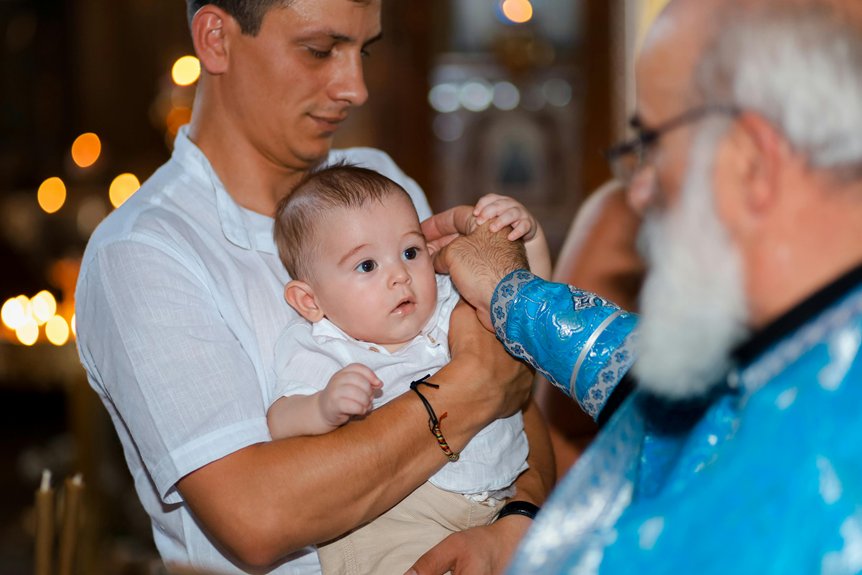
Dress for a baptism as though you’re honoring something sacred, not performing. Choose collared shirts with slacks or knee-length dresses, avoiding jeans and flashy patterns that draw attention away from the ceremony. Layer thoughtfully to accommodate comfort and weather changes. Your outfit communicates respect through modest, semi-formal choices that blend respectfully into the moment rather than directing focus toward you. Pay attention to the specific details about adapting to your role and setting; this will help you achieve the right balance.
Why What You Wear Matters at a Baptism
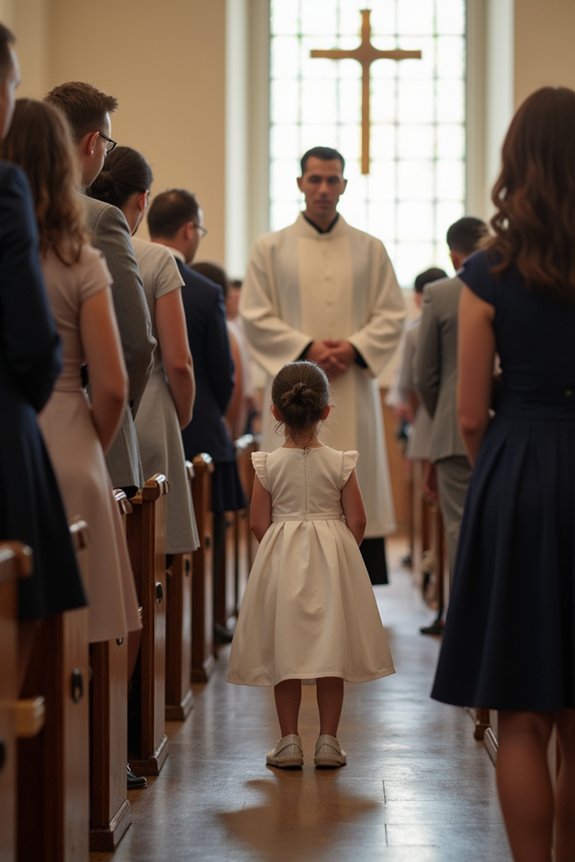
Why does what you wear to a baptism actually matter? Your clothing communicates respect for this sacred moment. Dressing thoughtfully shows reverence for the ceremony and consideration for those around you. When you choose modest, formal attire, you’re saying: “This occasion deserves my best.” It’s not about impressing others; it’s about honoring the spiritual significance. Think of your outfit as a physical statement of your values. Smart casual or formal wear demonstrates that you understand the formality expected. Avoiding jeans, T-shirts, and revealing clothing preserves the solemn tone everyone gathers to experience. Your choices ripple outward, setting a respectful atmosphere for the entire community. Dressing appropriately isn’t restrictive. Instead, it allows you to focus fully on what truly matters: celebrating this meaningful faith milestone together.
Outfit Expectations by Your Role: Guest, Parent, Godparent, or Officiant
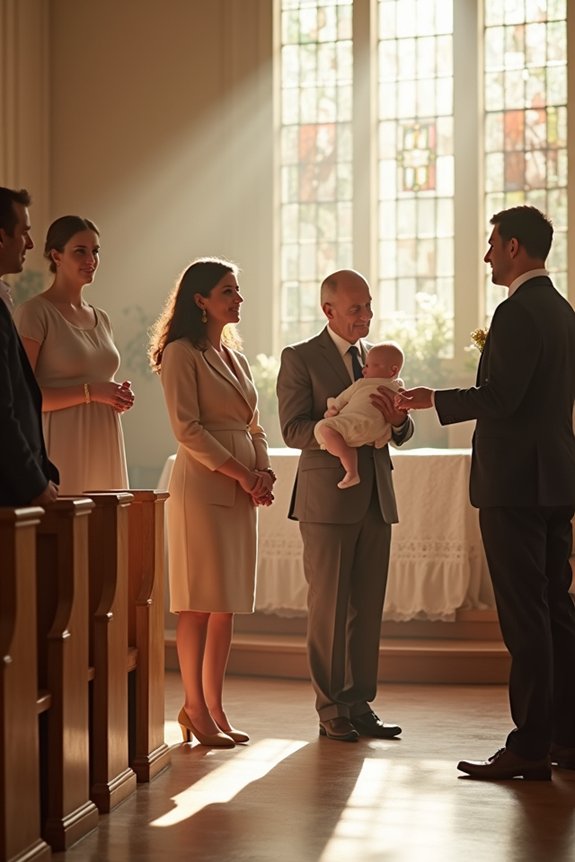
Your role at a baptism directly shapes what you’ll wear, and getting this right matters more than you’d think. Whether you’re attending as a guest, stepping up as a parent, serving as a godparent, or officiating the ceremony, each position carries its own dress code expectations. Here’s what works for each role so you can show up looking appropriate and feeling confident.
Guest Attire Guidelines
What you wear to a baptism matters more than you might think, because your clothing communicates respect for the ceremony and the spiritual significance of the moment. As a guest, aim for smart casual attire that leans slightly formal: think collared shirts with slacks or a knee-length dress. Your modest dress choice shows reverence and helps you blend respectfully into the celebration.
Skip jeans, T-shirts, tank tops, and skin-tight fits entirely. These pieces undermine the solemnity of what’s happening. Instead, opt for blazers, blouses, and dress pants that feel put-together without screaming effort. For baptism attire, clean lines matter most.
Consider the setting too. Indoor ceremonies call for layers like cardigans; outdoor events need weather-appropriate shoes. When you dress thoughtfully, you’re not just following guidelines. You’re joining a community honoring something sacred together.
Family Members’ Dress Codes
Beyond the general guest guidelines, your specific role in the baptism ceremony shapes how you should dress. If you’re coordinating with the child, aim for semi-formal attire that keeps comfort in mind. You’ll be holding or supporting your little one, so choose fabrics that move freely and won’t restrict your arms. Subtle color coordination with the christening gown or suit shows thoughtfulness without stealing focus.
Godparents should embrace modesty as a spiritual commitment, selecting respectable outfits that reflect the ceremony’s reverence. Your dress code communicates respect for this sacred moment.
Officiants need darker, practical clothing suitable for liturgical settings and potentially wet conditions. Remember that everyone’s outfit choices collectively honor what you’re celebrating together as a faith community.
Dress Code Essentials: Modest, Semi-Formal Styles
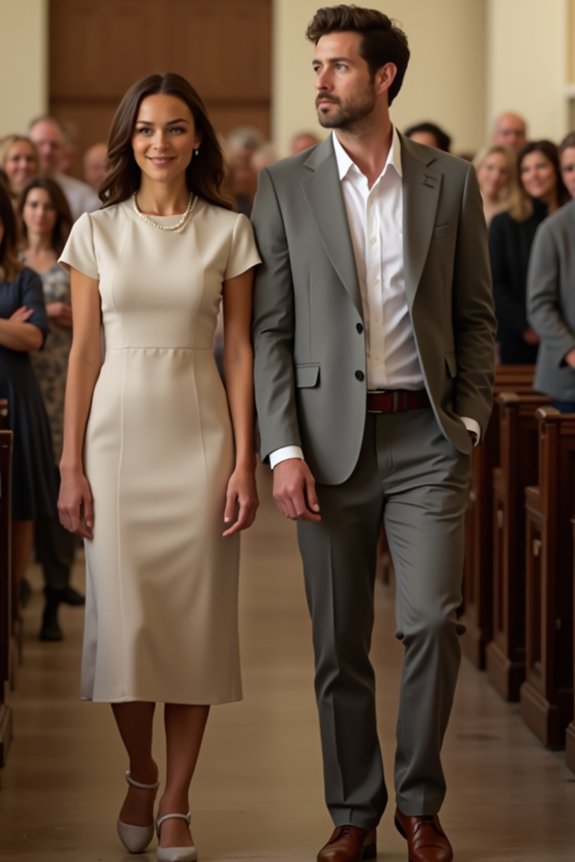
How do you strike that balance between looking polished and showing genuine respect for a sacred moment? Semi-formal, modest attire accomplishes this. You’re not overdressed or underdressed; you’ve appropriately honored the occasion.
Semi-formal, modest attire strikes the perfect balance between looking polished and showing genuine respect for sacred moments.
What to consider essential:
- Skip casual wear entirely. Jeans, t-shirts, and tank tops undermine the solemnity, so choose structured pieces instead.
- Opt for knee-length dresses or pantsuits. These silhouettes feel put-together while maintaining dignity and comfort.
- Layer thoughtfully. Shawls and cardigans handle temperature while adding elegance to your ensemble.
Your modest attire communicates respect without demanding attention. When you dress intentionally for baptisms, you feel more connected to the meaning behind the celebration. You’re part of something meaningful; your clothing should reflect that commitment to reverence and unity.
Adapt Your Look to the Setting and Time of Day
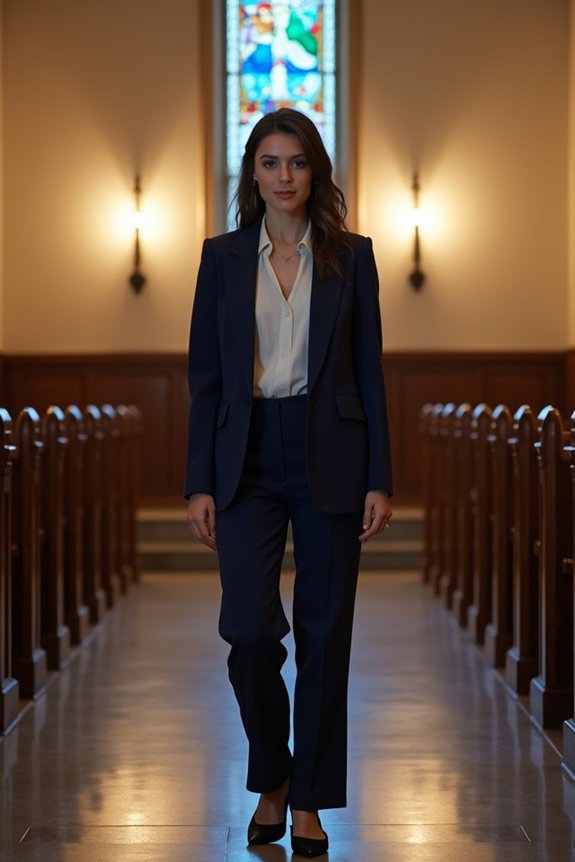
The setting and timing of a baptism shape what you’ll wear, so think beyond just picking a nice outfit. An indoor ceremony calls for different choices than an outdoor one, and a morning service reads differently than an evening celebration. This means you’ll want to adjust your colors, layers, and even your shoes accordingly. Here’s how to match your look to each situation while showing respect and staying comfortable.
Indoor Versus Outdoor Settings
Where you’re celebrating matters just as much as what you’re wearing. Indoor and outdoor baptism settings demand different approaches to baptism attire, and getting this right shows respect for the occasion.
For indoor ceremonies, choose an attire that keeps things modest and reverent:
- Knee-length dresses or sleek pantsuits in navy, black, or burgundy
- Closed-toe shoes for hard floors and potential slipping hazards
- A lightweight shawl or cardigan for unexpected church chill
If your event transitions outdoors, plan carefully with clothing you can layer. Bring pieces you can easily remove or add as temperatures shift. Choose shoes that work on both polished floors and grass or gravel. This flexibility helps you feel comfortable and appropriately dressed throughout the celebration, no matter where the day takes you.
Time Of Day Considerations
Beyond choosing the right venue-appropriate clothes, you’ll also want to consider what time of day the baptism takes place. Morning light hits differently than evening glow, and that affects both your outfit choices and how you’ll feel wearing them.
| Time of Day | Best Color Choices | Fabric & Style | Dress Code Tone |
|---|---|---|---|
| Morning | Light pastels, whites | Breathable, simple | Casual-reverent |
| Afternoon | Full pastels, brights | Midi dresses, chic tops | Semi-formal |
| Evening | Darks, subtle shimmer | Elegant, restrained | Formal-solemn |
Morning baptisms feel lighter in energy. For these ceremonies, soft hues and comfortable fabrics work well. Afternoon events offer more flexibility; you can embrace color without overdoing it. Evening ceremonies call for a different approach. That’s when darker tones and understated elegance become appropriate. Each time slot carries its own energy, and your outfit should honor that rhythm.
Coordinating With Event Formality
The key is to let the event’s tone guide you. Choose fabrics and silhouettes that communicate respect while keeping accessories minimal. You’re supporting someone’s faith journey, and your thoughtful appearance reflects that commitment.
Best Colors and Fabrics for a Baptism Outfit
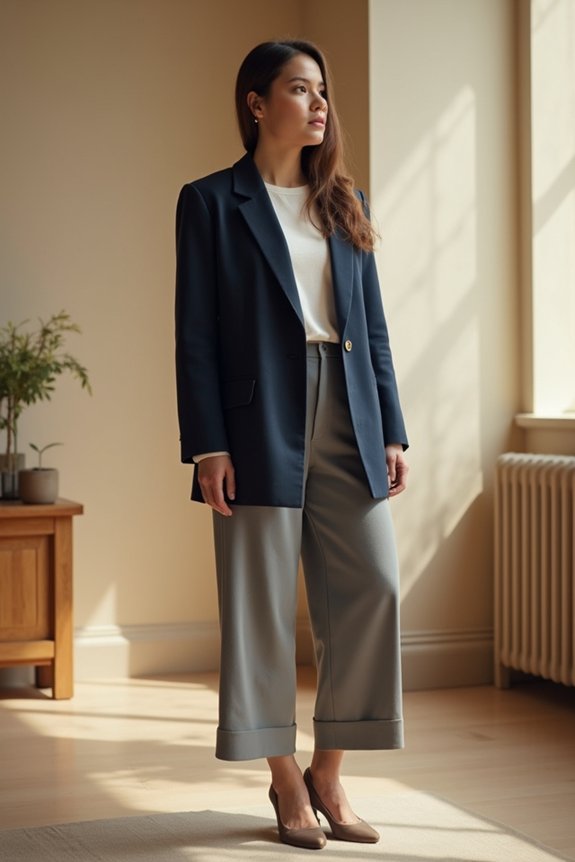
How do you choose colors and fabrics that feel both respectful and comfortable?
Darker, muted tones work beautifully for baptisms. Navy, charcoal, soft gray, and deep jewel tones convey formality while avoiding white, which can create ceremonial competition or transparency concerns.
For fabrics, prioritize breathability and modesty. Cotton blends, silk, and lightweight knits let you move freely, whether you’re holding a baby or sitting through a longer service. These materials also drape well, maintaining the dignity your outfit requires.
Avoid clingy fabrics; they compromise modesty and draw unwanted attention. Instead, choose structured pieces that respect the sacred nature of the occasion. Your clothing should serve as support, not spectacle. When your fabrics breathe and your colors recede gracefully, you’re free to focus entirely on celebrating this meaningful milestone.
Skip Outfit Mistakes That Distract From the Service
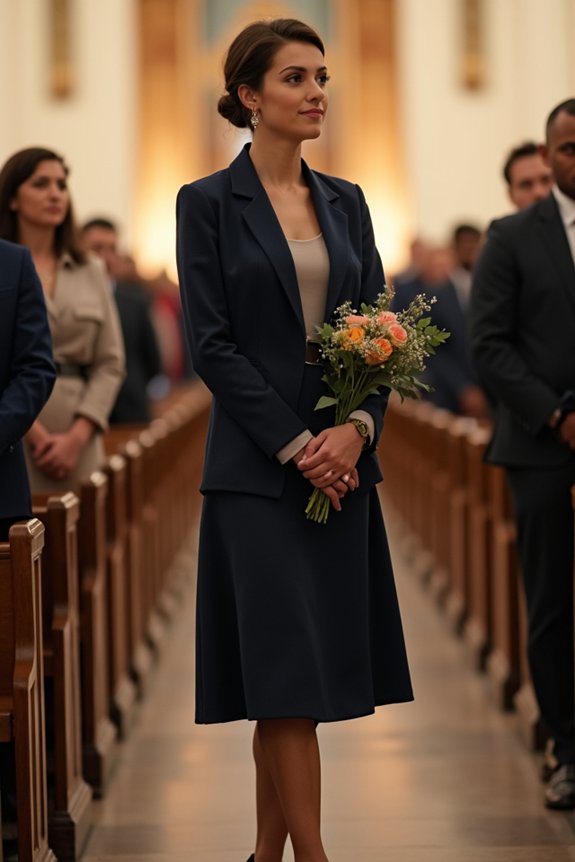
What separates a thoughtfully dressed guest from someone who unintentionally derails the ceremony’s focus? The difference lies in understanding what to avoid.
I’ve learned that certain outfit choices pull attention away from the sacred moment:
- Casual wear breaks formality. Jeans, t-shirts, and joggers signal that you’re not taking the event seriously. The ceremony deserves your respect through proper dressing.
- Clingy or sheer fabrics invite unwanted focus. White clothing especially can become transparent when wet, compromising modesty during the ritual itself.
- Overly trendy or bold pieces distract. Loud patterns, revealing cuts, or flashy accessories shift eyes toward you rather than the baptism.
I recommend choosing collared shirts, slacks, or modest dresses instead. Your goal is to blend respectfully into the liturgical setting. When you dress appropriately, you’re not just following rules. You’re honoring the person being baptized and supporting their spiritual journey with quiet dignity.
Prepare for Weather, Comfort, and Post-Ceremony Changes
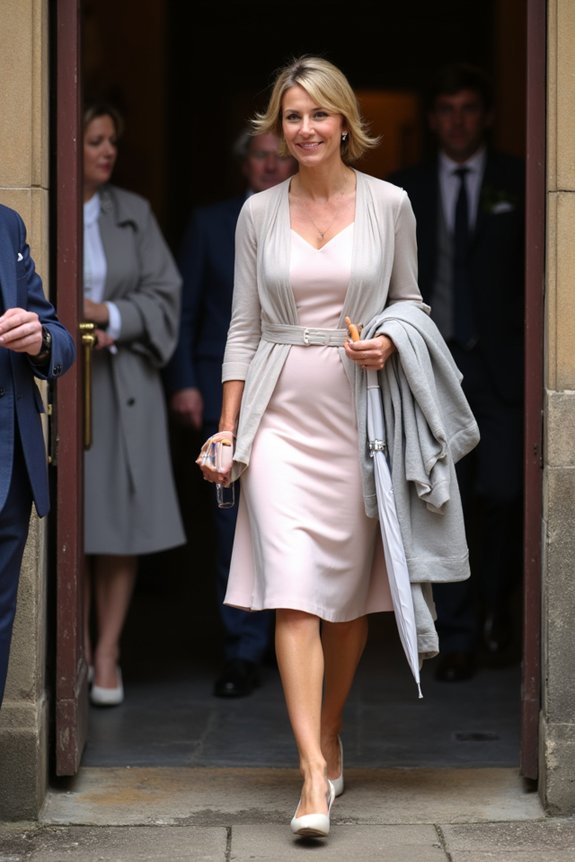
Beyond choosing the right outfit, you’ll want to think practically about what Mother Nature might throw your way. Weather preparedness allows you to feel present at the ceremony rather than preoccupied with discomfort.
Bring backup shoes for varied terrain or wet surfaces. Pack a towel and extra clothes for post-ceremony changes, especially if the baptism involves water. Choose breathable fabrics for warm months, and layer up or grab an umbrella for cooler or rainy days.
Prepare for any weather with backup shoes, extra clothes, and layers—so you can stay comfortable and present throughout the ceremony.
What matters most: comfort allows you to focus on the spiritual significance rather than fidgeting constantly. Select pieces that swap easily if the event shifts from indoor to outdoor settings. Plan for quick changes without scrambling or feeling underdressed afterward.
When you’re prepared for weather and transitions, you’re free to fully engage with the meaningful moment unfolding around you.