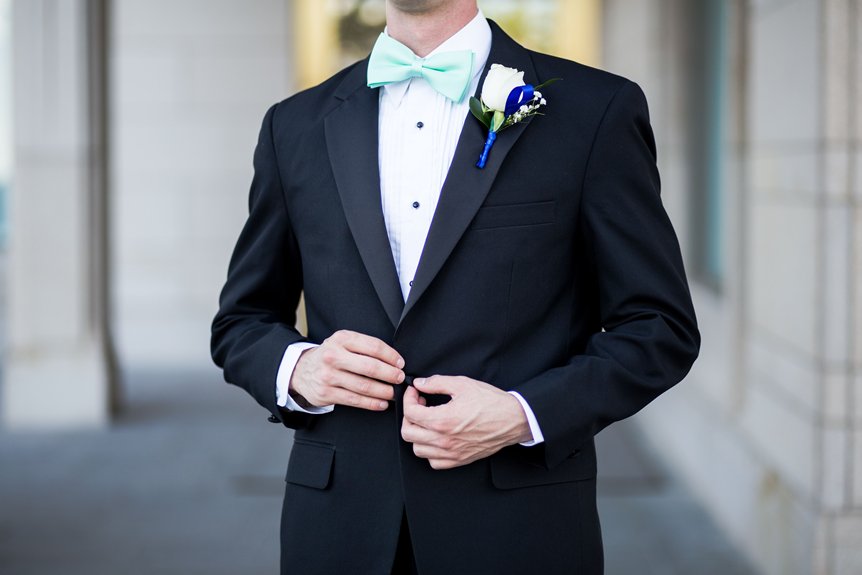
Master a tuxedo by checking your invitation for black-tie cues, then selecting a one-button, single-breasted jacket with satin lapels that matches your frame perfectly.
Pair high-waisted trousers with suspenders and a plain hem for a clean line.
Choose a wing-collar shirt with French cuffs, add a self-tied silk bow tie, and layer either a cummerbund or vest.
Finally, polish your patent leather shoes, coordinate your cufflinks, and stand tall with shoulders back and chest lifted.
Each decision builds toward polished sophistication, and the details reward close attention.
Assess Your Event’s Formality Level and Dress Code
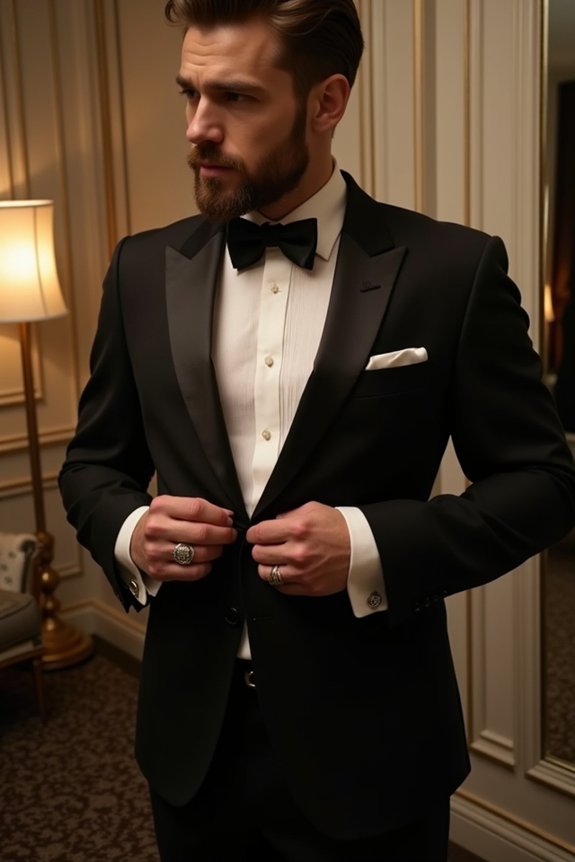
How do you know if you’ve got a black-tie event on your hands? Check your invitation carefully. If it specifies black tie, you’re wearing a tuxedo, period. This dress code means evening wear after 6 p.m., and it’s formally required.
Here’s the rule: when you’re unsure about formality level, overdress rather than underdress. It shows respect for the host’s vision. A classic black or midnight blue tuxedo works perfectly for almost any black-tie situation. Pair it with matching trousers and minimal accessories.
Ask yourself these questions: does the invitation mention black tie explicitly? Are we gathering after sunset? Is this a prestigious occasion? When you answer yes to these questions, you’ve determined what to wear.
Select Your Tuxedo Jacket Style Based on Occasion Tone
Now I’ll help you find the perfect jacket for your specific event, because the wrong choice, no matter how well-fitted, can throw off your entire look. Your lapel style, button configuration, and fabric all work together to signal either timeless formality or creative flair, and I’ll show you exactly how to navigate these decisions. Let’s break down what actually works for different occasions, so you’re not just dressed up but dressed right.
Lapel Styles And Formality
When you’re selecting your tuxedo jacket, the lapel style you choose tells the world exactly how seriously you’re taking the occasion. Lapels function as your outfit’s first impression, signaling formality through subtle design choices.
Consider these lapel options for formal events:
- Peak lapels – These visually elongate your frame and represent the pinnacle of black-tie sophistication, creating sharp, angular lines that command respect.
- Shawl collars – They deliver classic elegance with rounded curves, equally formal yet offering a distinctive, refined aesthetic.
- Notch lapels – More casual in appearance, they become acceptable when accented with grosgrain edging to elevate formality.
- One-button, single-breasted jackets – These represent peak formality, particularly when paired with peak lapels for maximum impact.
The lapel you select shapes how others perceive your attention to detail. Your choice directly influences the overall formality of your appearance and demonstrates your understanding of dress codes and occasion-appropriate styling.
Jacket Buttons And Elegance
Why does something as simple as a button matter so much? Because it signals whether you’re truly mastering tuxedo elegance or just getting by.
A one-button, single-breasted tuxedo jacket creates the most refined silhouette. This classic choice, paired with peak lapel styling and satin lapels, communicates confidence and formal sophistication. The single button sits perfectly at your natural waist, creating clean lines that flatter your frame.
Keep that button fastened when standing and unfasten it when sitting. Pair your one-button jacket with a wing collar shirt for maximum polish. This combination isn’t arbitrary tradition; it’s a proven formula for looking intentional and put-together.
You’re not following rules for their own sake. You’re joining generations of men who’ve mastered this timeless dress code through strategic, thoughtful choices.
Occasion-Appropriate Jacket Selection
Your jacket choice tells the story of the evening before you even speak. Matching your tuxedo jacket to the occasion’s tone separates the polished from the overdressed.
Traditional black-tie events call for a ventless single-breasted jacket in black fabric or midnight blue worsted wool with satin lapels.
Formal dinners benefit from shawl lapels, which convey equal formality to peaked lapels without feeling stuffy.
Creative or festive occasions work well with double-breasted styles, allowing you to express personality while maintaining sophistication.
Winter galas suit velvet or decorative options, which complement colder seasons and less formal interpretations.
The ventless cut signals formality. Single-breasted jackets with shawl lapels keep things timeless. When you align your jacket selection with the evening’s vibe, you command respect and confidence. That’s when you truly wear the tuxedo, not the other way around.
Ensure Your Jacket Fits Your Shoulders and Frame
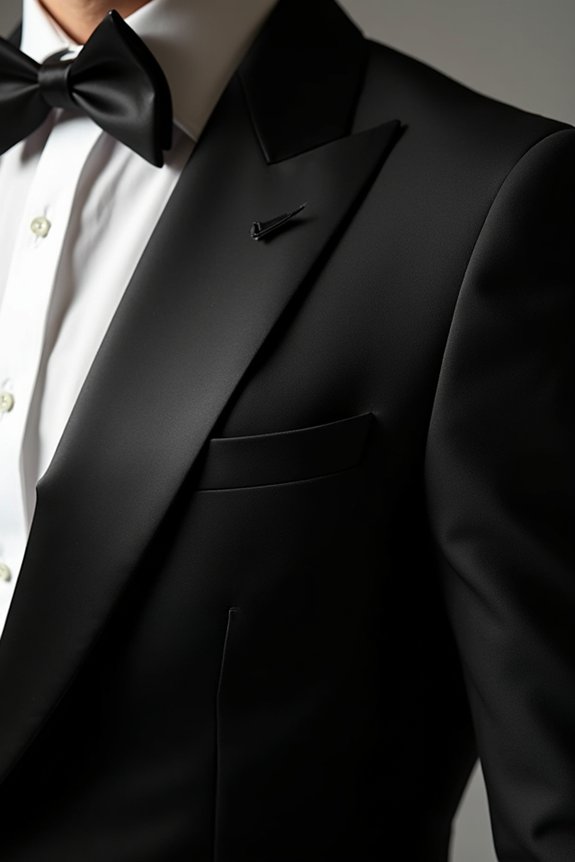
Your jacket’s shoulders are the foundation of everything else, so pay close attention to what you’re looking for when trying it on. The seam where the shoulder fabric meets your sleeve should sit right at your natural shoulder point, not creeping onto your arm or hanging past it. Your armhole needs to feel comfortable enough that you can move freely without the jacket bunching up under your arms. Once you’ve nailed those two things, you can assess whether the jacket’s overall length and proportions work with your frame. A well-fitted shoulder determines how the entire tuxedo drapes on your body.
Shoulder Seam Placement Matters
Since the shoulder seam is where your jacket’s structure meets your body’s foundation, getting it right transforms everything else you’ll do with tailoring. This single detail affects your entire silhouette.
Here’s what proper fit demands:
- Center the seam directly over your shoulder bone; not forward or back
- The sleeve cap should just brush your shirt’s shoulder line without puffing
- Fabric should roll smoothly from collar to sleeve without wrinkling
- You should be able to raise your arms freely without bunching or stiffness
When your jacket shoulder aligns correctly, your lapel drape falls naturally, and any remaining tailoring becomes straightforward. Misaligned seams force your tailor to compensate everywhere else. You’ll notice the difference immediately. That confident, put-together feeling comes from shoulders that actually fit your frame.
Jacket Length and Proportion
A jacket works for your frame when it covers your seat completely and ends at your palm’s midpoint as your arms hang naturally. That’s your proportion sweet spot.
Shoulder fit determines everything. The seam should sit precisely at your shoulder’s edge with no drooping. From there, jacket length balances your silhouette by hitting the hip line cleanly. Your sleeves should reach your wrist without excess fabric bunching.
Check your natural waist placement as well. Button placement sits at or just above it, creating the sharp line you’re after. The drape matters equally. Minimal excess fabric at your chest and back signals a proper fit.
You’ll feel the difference immediately. A well-fitted jacket creates confidence through precision.
Armhole Comfort and Mobility
Once you’ve nailed the jacket length, the real test comes when you actually move in it. I’m talking about armhole comfort and mobility; the difference between looking sharp and feeling trapped.
Here’s what you need to verify:
- Shoulder fit – The seam should sit right at your shoulder’s edge, not pulling inward or sagging outward
- Arm mobility – Raise your hands to shoulder height and bend your elbows. You shouldn’t feel chest tightness
- Sleeve drape – There’s a slight gather at the shoulder line, not rigid or bunched
- Underarm comfort – No pulling across your chest or back when you move
Natural wool blends offer better movement than stiff synthetics. If you spot creasing along your upper back or armhole, minor tailoring adjustments will preserve clean lines while maintaining your freedom to move confidently all night.
Match Trousers to Your Jacket Cut and Inseam
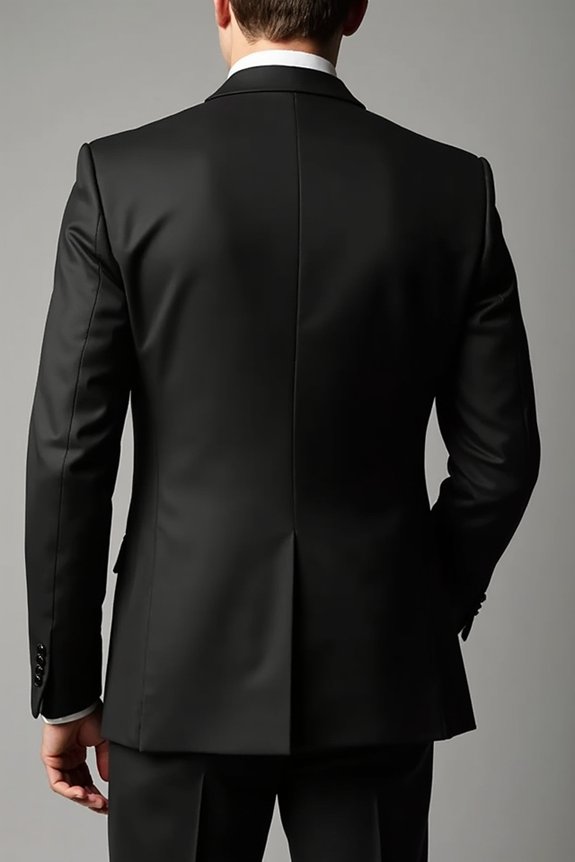
You’ve got your jacket picked out. Now the trousers make or break the whole look. Matching your tuxedo trousers to your jacket material isn’t just detail work; it’s essential. Your inseam length matters tremendously. You want that front break sitting perfectly over your shoes without bunching or dragging.
Here’s what separates amateurs from professionals:
| Element | Why It Matters | Your Move |
|---|---|---|
| Jacket Material Match | Creates cohesion | Choose identical fabric |
| High-Waisted Trousers | Hides waist covering | Sit at hipbone |
| Inseam Measurement | Prevents awkward breaks | Slight break over shoes |
| Satin Braid Detail | Adds polish | Runs outer seams |
High-waisted trousers work with your waist covering (vest or cummerbund) for that seamless front. Skip the cuff entirely; a plain hem preserves your jacket’s formal line. Suspenders, not belts, keep everything secure and clean-looking. These choices will improve your entire presentation.
Pick a Shirt Collar That Suits Your Neckwear Choice
Your trousers are locked in, and now we move to the shirt. This is the foundation that will frame your entire face and neck. The collar you choose depends entirely on your neckwear selection.
Here’s what you need to know about collar options:
- Wing collars work best with bow ties, fully exposing the band for maximum visual impact
- Spread collars offer flexibility and suit various bow tie styles effectively
- Turndown collars provide a softer alternative while maintaining formality
- French cuffs paired with cufflinks complete the polished look
For traditional black-tie events, wing collars are the standard choice. They’re designed specifically for bow tie wear and create that crisp, intentional appearance. Your tuxedo shirt’s collar should sit snug under the jacket, framing your neckwear perfectly. Match your collar to your bow tie choice, and you’ll project confidence.
Layer a Cummerbund or Vest, Then Choose Your Bow Tie
The waist covering you select, whether a cummerbund or vest, frames your entire torso and determines how polished you’ll look. Matching your waist covering to your jacket fabric and lapel facing creates that unified sophistication everyone notices.
| Waist Covering | Best For |
|---|---|
| Cummerbund | Traditional black-tie events |
| Vest | Formal dinners, weddings |
| Full-back vest | Complete coverage preference |
| Low-cut vest | Modern, sleek appearance |
| Black silk option | Maximum versatility |
What matters most: your cummerbund’s pleats face upward, mimicking pockets, while your vest covers the waistband completely. Then comes your bow tie. Coordinate its fabric with those lapel facings. Self-tied black silk works better than pre-tied versions. This combination signals that you understand black-tie events. You’re not just wearing a tuxedo; you’re wearing confidence and belonging.
Finish With Patent Leather Shoes, Cufflinks, and Refined Posture
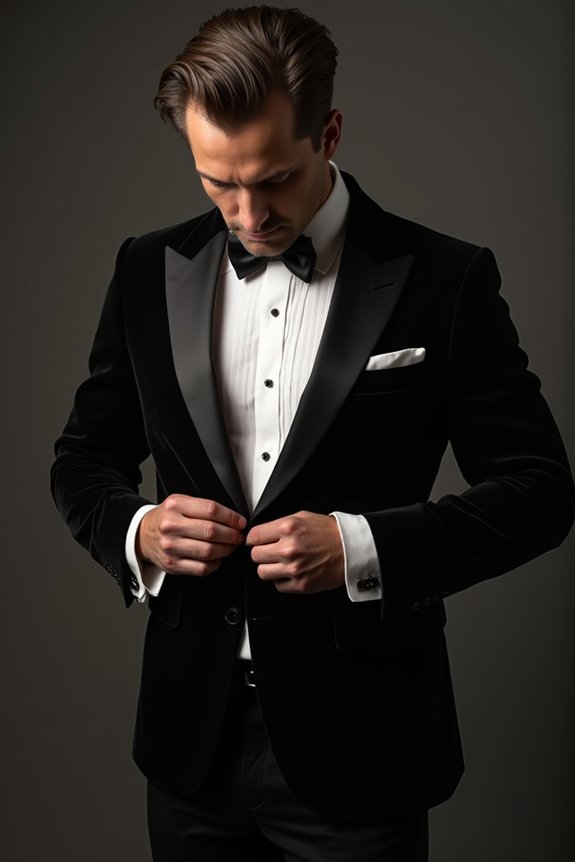
Now that you’ve nailed the upper half with your bow tie and vest, it’s time to ground your entire look from the ankles up. Finishing touches separate amateurs from professionals.
- Polish your patent leather shoes until they mirror-shine like glass, creating that sophisticated reflection that conveys formal wear confidence.
- Match your cufflinks to your other metals: studs, boutonnière accents. Everything should harmonize without competing for attention.
- Keep your pocket square understated and refined, allowing your cufflinks to be the focal point on your French cuffs.
- Own your refined posture: shoulders back, chest lifted, controlled gait. Your tuxedo deserves a confident frame.
When every element aligns properly, you’ll feel the difference. You’re not just wearing formal wear; you’re embodying tuxedo mastery.