
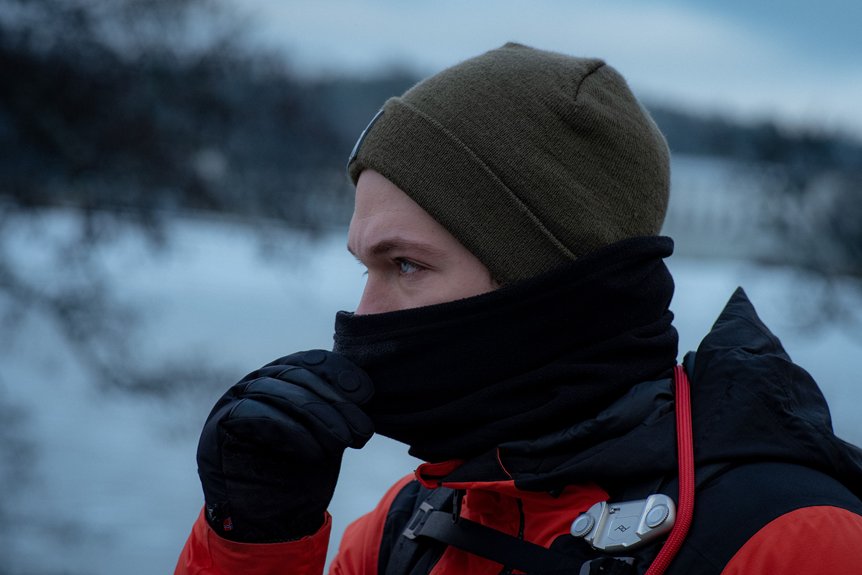
Most hikers get layering wrong; they overdress and overheat or underdress and risk hypothermia.
The solution is a three-layer system: moisture-wicking base (merino wool, not cotton), insulating mid-layer (fleece), and breathable shell.
Match your layers to pace and conditions, adjusting as you move.
Pack your mid-layer and shell near the top for quick access.
This flexible approach keeps you comfortable without the guesswork, and you can refine your strategy as conditions change.
The Three-Layer Foundation: Base, Mid, Shell
You’ll want to think of layering like building a house. You need a solid foundation, insulation in the middle, and a roof that keeps the weather out. Your base layer does the heavy lifting first. It wicks moisture away from your skin, keeping you dry and comfortable. Skip cotton entirely; it absorbs sweat and causes chafing. Your mid layer traps warm air while staying breathable, so you can strip it off when things heat up. Finally, your outer layer shields you from wind, rain, and snow without trapping moisture inside.
This three-layer system isn’t rigid. It’s flexible. You adjust based on conditions and effort level, which is exactly what separates amateurs from seasoned hikers. The foundation you build through understanding these layers directly impacts your comfort on the trail.
Why Material Matters in Hiking Layers
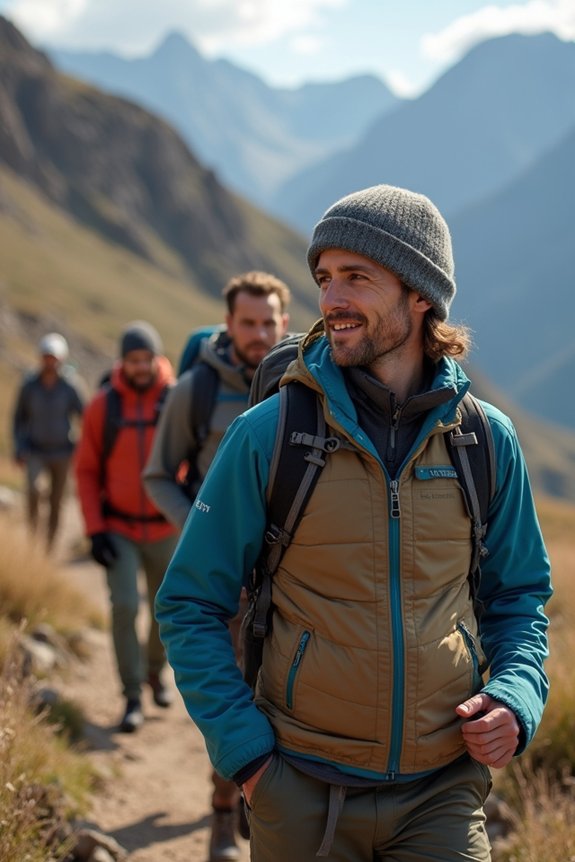
Ever wonder why some hikers stay comfortable all day while others are miserable by mile three? The answer lies in material choice. When I switched from cotton base layers to merino wool, everything changed. Cotton absorbs moisture and clings to your skin, creating conditions for hypothermia. Merino wool wicks sweat away while resisting odor, keeping you dry and fresh.
For midlayers, fleece traps body heat effectively, especially micro-grid varieties during high-output activities. Synthetic fabrics dry faster and cost less, though they develop odor over time.
Your outer layers need breathable materials like Gore-Tex for moisture management without sacrificing warmth retention. This three-layer system, consisting of base, mid, and shell layers, works together as a unified approach. Match the right materials to each layer, and you’ll understand why experienced hikers rarely complain about their comfort.
What to Wear Hiking in Each Season
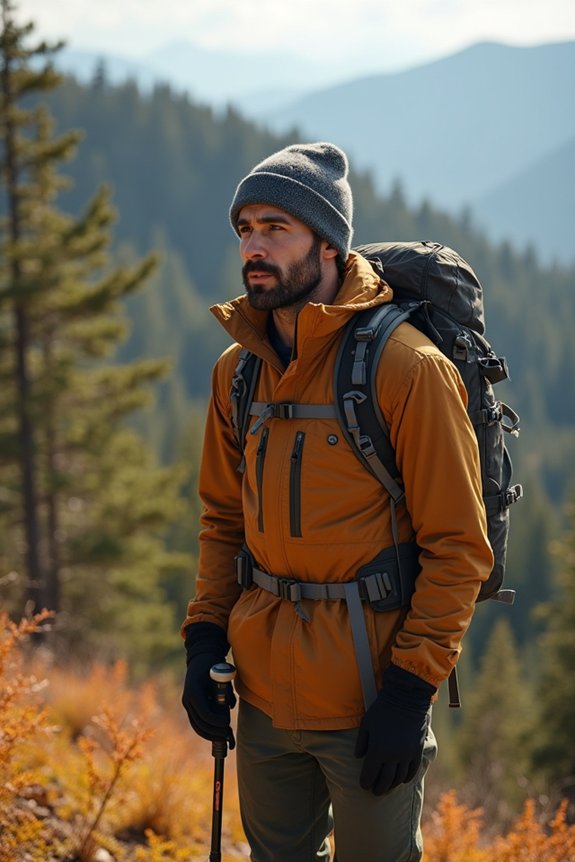
Because the weather changes dramatically throughout the year, your layering strategy needs to shift too. For three-season hiking, I start with a moisture-wicking base layer (Merino wool or synthetic fabrics work best), then add a mid layer like fleece for warmth. Finally, I top it with a waterproof jacket as my outer shell. The trick? Don’t rely solely on actual air temperature. Instead, I consider apparent temperature, which factors in humidity and wind chill. This guides my choices better than thermometers alone. In summer, I skip heavy insulation layers entirely. Come winter, I add an insulation layer between my mid layer and shell. This flexibility keeps me comfortable whether I’m hiking through spring wildflowers or autumn snow.
Match Your Hiking Pace to Layer Choices
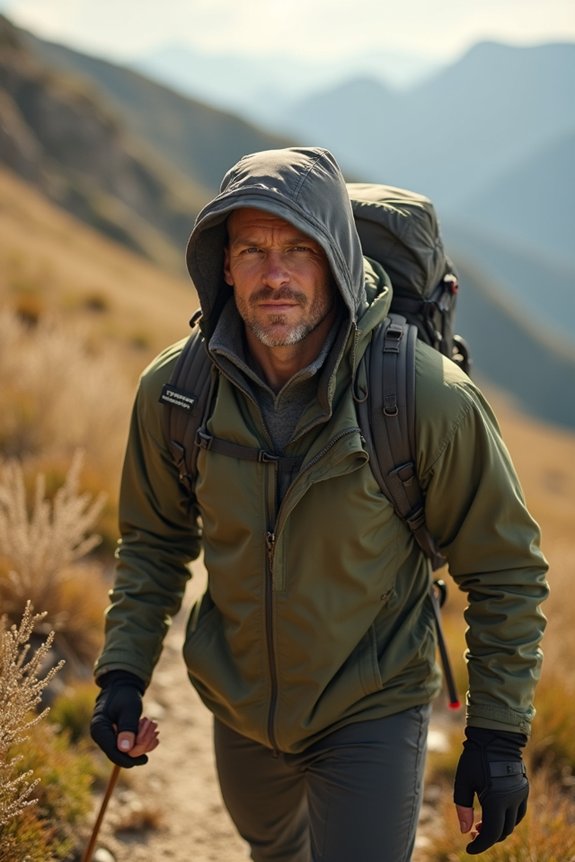
How fast you’re moving fundamentally changes what you need to wear. Your body generates heat differently depending on whether you’re cruising or crawling uphill, and pace-driven warmth is a real factor in comfort.
Here’s what works:
- Fast pace: Shed insulation layers early. Keep just your base and mid layer active to prevent overheating during sustained movement.
- Moderate pace: Use the full four-layer system flexibly. Your outer layer stays accessible for quick adjustments when terrain shifts.
- Slow pace or breaks: Add that insulating layer immediately. Heat loss happens fast when you’re stationary, so layer up before you cool down.
- Terrain changes: Anticipate weather shifts by keeping hiking layers near your pack’s top.
Temperature perception isn’t absolute; it’s personal. Match your layering strategy to how hard you’re working, and you’ll maintain comfort every time.
Pack Layers for Trail Adjustments
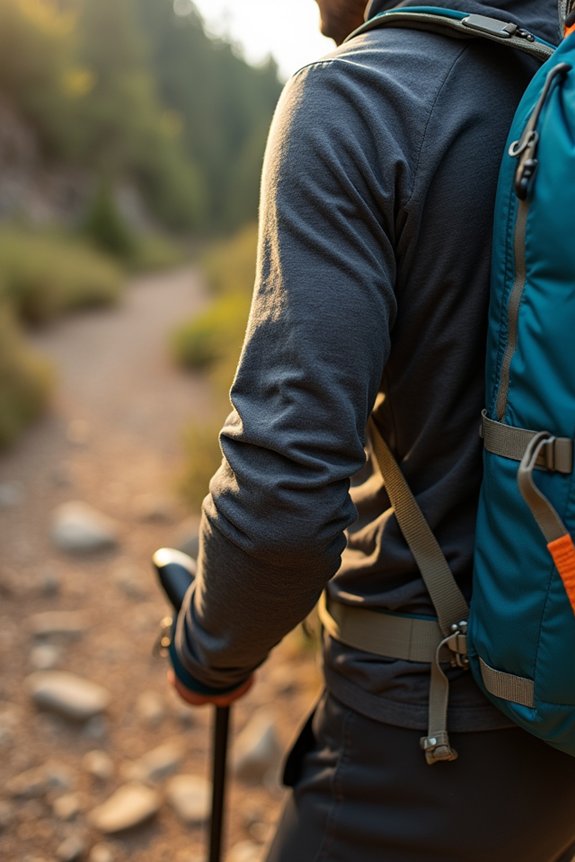
What good’s a perfectly assembled layering system if you can’t actually reach your gear when you need it? I’ve learned this lesson the hard way on the trail.
Pack your mid-layer and outer shell near the top of your pack for quick adjustments. Weather shifts fast, and you’ll need breathable fabric accessible within seconds, not buried underneath everything else.
I use a lightweight 5L or 10L pack bag to prevent over-compression that crushes insulation and kills loft. This smart weight management keeps my layering system functional.
| Layer Type | Placement | Purpose | Access Time |
|---|---|---|---|
| Mid-layer | Top section | Warmth and moisture management | Immediate |
| Outer shell | Near top | Weather protection | 10 seconds |
| Base layer | Worn | Moisture wicking | Already on |
| Pack bag | Main compartment | Protection | 30 seconds |
Trail conditions demand responsiveness. I’ve perfected pack access through experience, keeping my layering system ready for whatever comes next.