

I’m here to tell you: three layers beat ten any day. Your base layer wicks sweat away (skip cotton; it kills you in freezing temps), your mid-layer traps heat, and your shell blocks wind and rain. Adjust dynamically as you move. Shed before sweating, add when you stop. Include a hat, gloves, and socks for quick tweaks. This system works because it manages moisture and heat together, not separately. Stick with me, and I’ll show you exactly how to build yours.
Layering Works: Science of Staying Warm
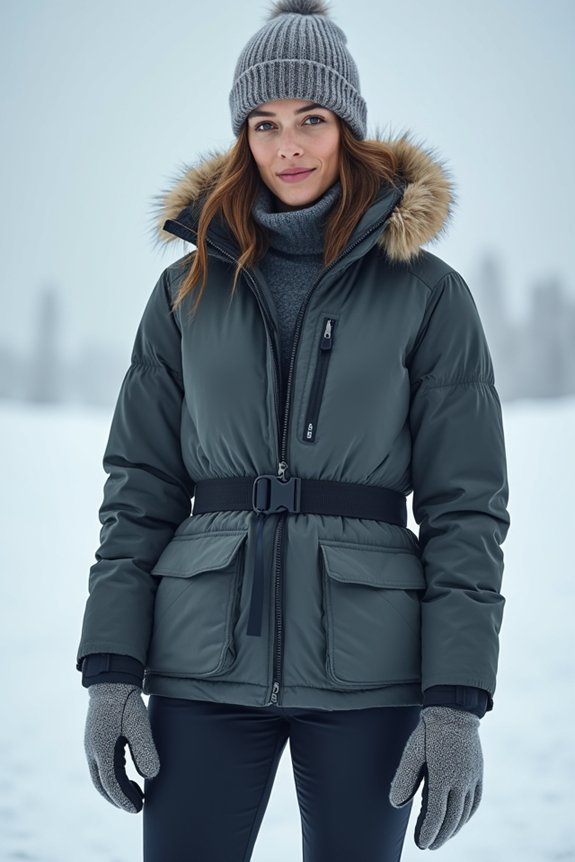
When you’re heading into freezing weather, the secret to staying comfortable isn’t buying one super-thick jacket; it’s understanding how layering actually works. I’ve learned this the hard way on countless cold-weather adventures.
The secret to cold-weather comfort isn’t one super-thick jacket—it’s understanding how layering actually works.
Here’s the system: your base layer wicks sweat away from skin, keeping you dry. Your mid layer traps core heat while staying breathable. Fleece works well for this purpose. Your outer shell blocks wind, rain, and snow from reaching you.
Each layer serves a specific purpose. Together, they create a dynamic heat-management system that responds as your activity changes. When you’re moving hard, you shed a layer. When you stop, you add one back.
This approach beats wearing one bulky coat every single time. You’ll stay warm, dry, and comfortable throughout your day.
The W.I.S.E. System Explained
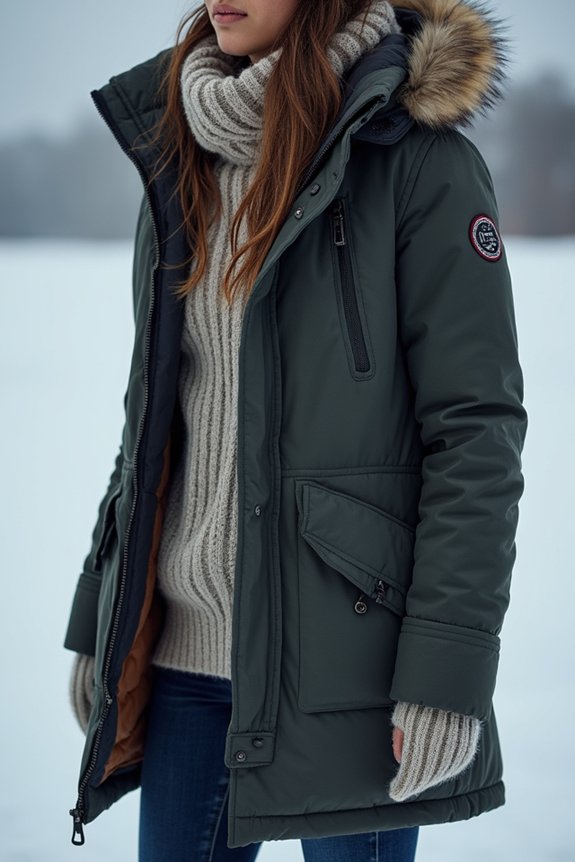
I’ve learned that the W.I.S.E. system (Wicking, Insulating, Shell, and Emergency layers) is your actual survival strategy in freezing conditions. You’ll start with a synthetic or wool base layer that pulls sweat away from your skin, add an insulating mid-layer like fleece or down for warmth, and top it with a windproof shell that keeps the elements out while letting moisture escape. Getting these three layers right means you can adjust on the fly, shedding or adding pieces as your activity level and the weather change.
Wicking Layer Essentials
Why does the first layer matter most in freezing weather? Your base layer is your foundation, and experience shows this is essential. When you’re outside in brutal cold, moisture management becomes everything. Sweat builds up fast during activity, and if it sits against your skin, you’ll cool down rapidly.
I always choose synthetic fibers or wool for my wicking base layer because they pull moisture away efficiently. Quick-drying materials like nylon and polyester prevent that damp, clingy feeling that reduces your warmth. Materials like DreamKnit Warm™ work well; they’re ultra-soft and brushed-back for comfort while managing moisture all day.
| Material | Drying Speed | Best For |
|---|---|---|
| Synthetic | Fast | Active use |
| Wool | Medium | All conditions |
| DreamKnit Warm™ | Fast | Comfort + function |
Your base layer must fit closely, minimizing heat loss and maximizing performance. This layer works to keep you warm and dry.
Insulating Mid-Layer Selection
Your mid-layer is where the real warmth happens; it’s the insulation engine that keeps your core temperature steady while you’re battling the cold. Lightweight fleeces like the Arc’teryx Delta Zip deliver serious warmth without bulk, trapping body heat while letting moisture escape so you won’t overheat during activity. For stationary situations or extreme cold, puffy jackets (whether down or synthetic) maximize insulation when you need it most. The key to smart layering is choosing mid-layer pieces that work even slightly damp, giving you flexibility as conditions change. Start here, then upgrade to fleece pants or tights if you need extra protection. Your mid-layer adapts with you, keeping you comfortable across varying activity levels and temperatures.
Shell Protection Strategy
Once you’ve got your base and mid-layers locked in, your outer shell becomes the final barrier between you and the elements, and this is where a lot of people get it wrong. Your shell needs to handle wind, rain, and snow without trapping moisture inside. Lightweight shells work well for moderate conditions, while fully waterproof, breathable options protect you during intense storms. What matters is this: look for ventilation features like pit zips and adjustable hems. These aren’t luxuries; they’re your escape valve when you’re generating heat. I’ve ditched shells without them, and I’m never going back. The right outer shell adapts to your activity level, keeping you dry from both outside weather and internal moisture. That’s weather protection that actually works.
Choose Moisture-Wicking Base Layers
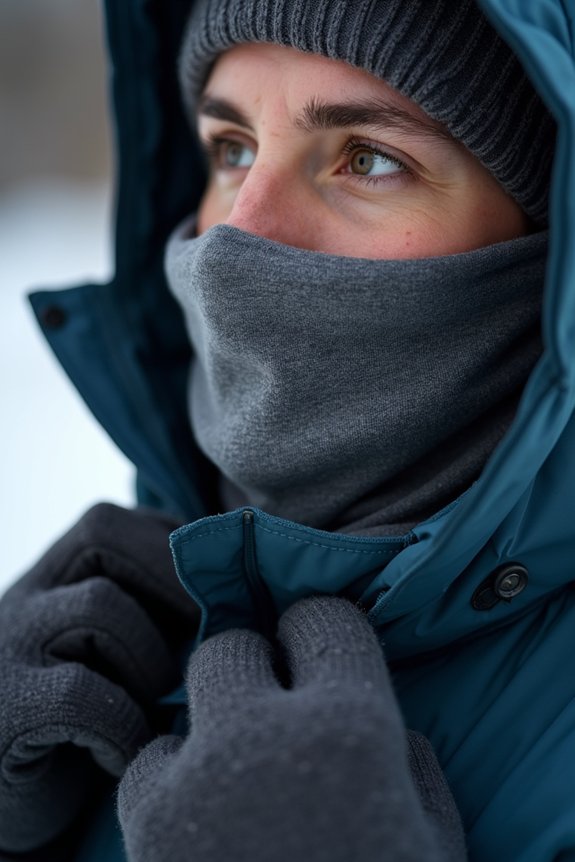
The foundation of cold-weather dressing starts with what touches your skin. Cotton is your enemy out there. When you sweat in cotton, it holds moisture against your body, draining heat faster than you’d think possible. That’s why switching to Merino wool base layers makes sense. These materials wick perspiration away while keeping you warm even in brutal conditions.
Your base layer fits snugly and moves sweat toward evaporation, preventing that dangerous chill. Merino wool handles extreme cold brilliantly; I’m talking -45 degrees. Quick-drying synthetics like nylon work too, but Merino’s natural properties outperform them consistently.
The smart move is to grab affordable Merino options at Costco for everyday wear. You’re joining countless others who’ve ditched cotton for genuine comfort and protection.
Build Mid-Layer Insulation
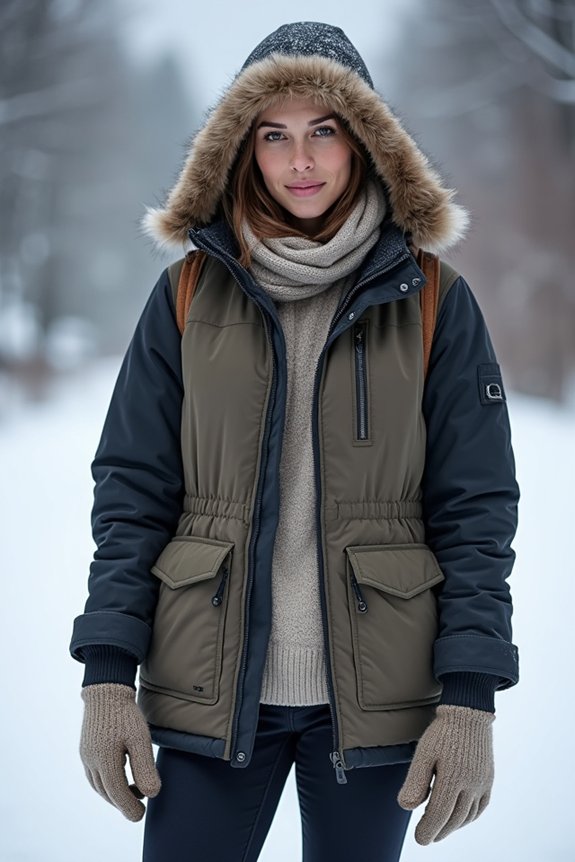
Once you’ve locked down a solid wicking base layer, it’s time to add the insulation that will actually keep you warm. This is where most people make mistakes.
Your mid-layer insulation performs two important jobs: it traps heat near your core while allowing moisture management to prevent that clammy feeling. Look for lightweight fleeces, puffies, or wool; these breathable options won’t restrict your movement.
The key principle is simple: avoid bulky layers that limit mobility. A MEC Cordova Zip Fleece or synthetic puff jacket hits that balance point well. When conditions are wet, synthetic or wool insulation continues to function even when damp, something cotton cannot do.
Think of your mid-layer as the bridge between warmth and comfort. Get this component right, and you’ll actually want to spend time outdoors.
Select an Outer Shell
Why does your outer shell matter more than you’d think? It’s your first line of defense against everything winter throws at you. I’ve learned that the right outer shell isn’t just about staying dry. It’s about staying comfortable enough to enjoy being outside.
Your outer shell is your winter’s first line of defense—it’s not just about staying dry, but staying comfortable enough to actually enjoy being outside.
You’ll want something breathable and waterproof, which sounds contradictory but isn’t. GORE-TEX is legendary for this balance, though durable nylon or polyester shells work great too. Here’s what I prioritize:
- Full waterproof protection from rain and snow
- Breathability so moisture escapes rather than traps
- Ventilation features like pit zips for heat regulation
Choose shells with adjustable hems and cuff tabs. These small details let you regulate temperature without stripping off layers. When your mid-layer insulation works with a quality outer shell, you have the foundation for real winter confidence.
Why Cotton Fails in Cold Weather
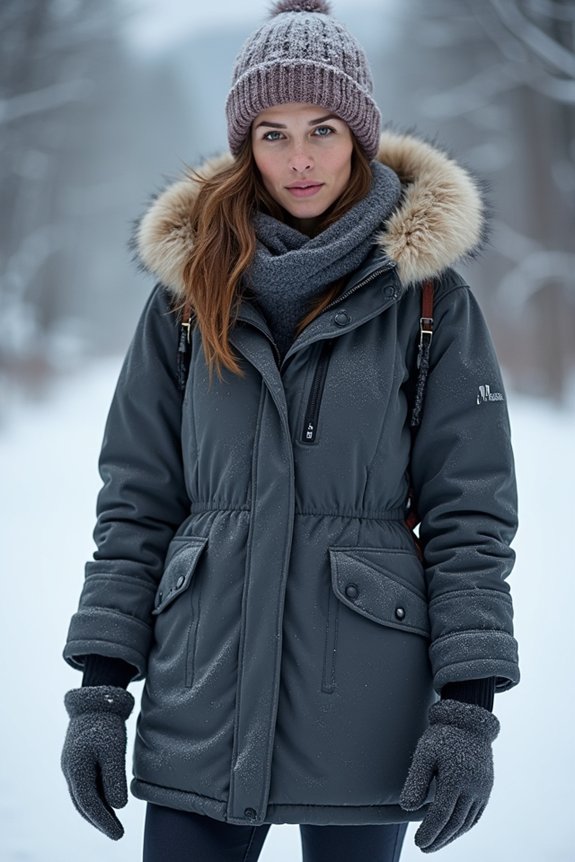
I’ve learned the hard way that cotton’s biggest enemy in freezing conditions is moisture. It soaks up sweat and snow melt, then clings to your skin while draining heat away fast. When cotton gets damp, it transfers heat roughly 25 times quicker than dry skin, which means you’re losing warmth dangerously quick out there.
That’s why I always reach for synthetic fabrics like polyester and nylon, or wool. These materials wick moisture away from your body and keep their insulating power even when they’re wet.
Moisture Retention and Heat Loss
How many times have you pulled on a cotton t-shirt under your winter coat, only to find yourself shivering an hour later?
Here’s what’s happening: cotton traps moisture against your skin instead of wicking it away. When sweat cools on that fabric, you experience a chill that accelerates heat loss fast. Wet skin conducts heat twenty-five times faster than dry skin, significantly increasing hypothermia risk.
That’s where moisture-wicking fabrics enter the picture. Polyester, nylon, and merino wool pull sweat away from your body, keeping you dry and warm. This layering strategy uses cotton-free options throughout every layer to maintain insulation when it matters most.
Skip cotton entirely. Your base layer, mid-layer, and underwear should all prioritize moisture management. You’ll join countless cold-weather adventurers who’ve discovered this difference firsthand.
Superior Fabric Alternatives
Understanding fabric science prevents poor cold-weather choices. Cotton traps moisture against your skin, which undermines warmth when temperatures drop.
Effective alternatives include:
- Polyester and nylon wick sweat effectively and keep you dry and warm
- Merino wool maintains insulation properties even when damp, unlike cotton
- Non-cotton fabrics move moisture away from your skin consistently
- Moisture-wicking layers preserve insulation in harsh conditions
- Synthetic blends dry faster and retain body heat
Fabrics should fight moisture rather than hold it. Layering with proper non-cotton materials keeps your body functioning optimally in cold environments. Your physiology will respond immediately to the difference between moisture-trapping and moisture-moving materials.
Cold-Weather Insulation: Down vs. Synthetic
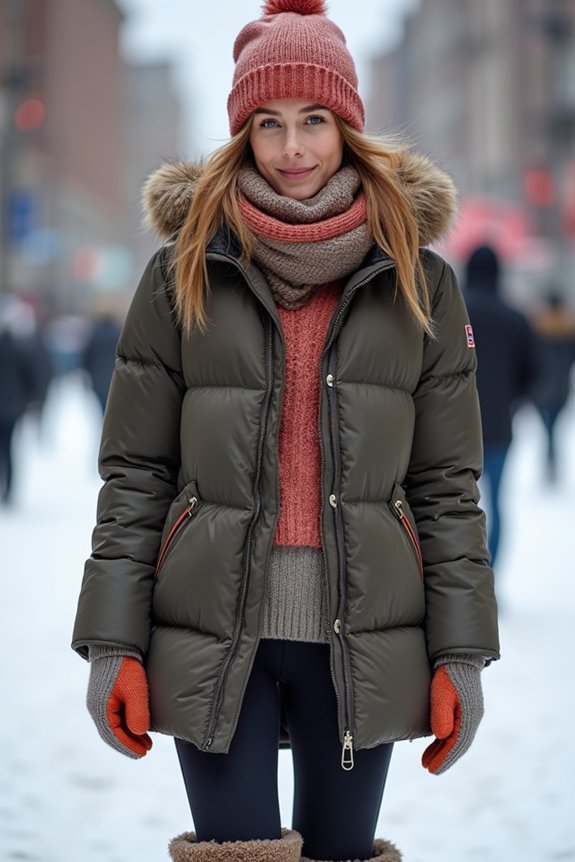
When you’re gearing up for a winter expedition, your insulation choice matters more than you’d think. It’s literally the difference between staying warm and shivering through the day. I’ve learned this the hard way.
Down insulation is light and packable, making it perfect for alpine trips. But here’s the catch: it fails when wet. Synthetic insulation, though bulkier, stays warm even when damp. This advantage proves valuable for mixed conditions.
I recommend layering strategically. Use a moisture-wicking base layer first. Then add your insulation mid-layer: down for dry climates, synthetic for wet ones. Top it with a protective outer shell.
Your climate determines everything. Cold and dry conditions? Down works well. Wet and unpredictable weather? Synthetic keeps you safe. Choose based on your specific environment, and you’ll stay comfortable all day.
Layering Adjustments for Severe Weather
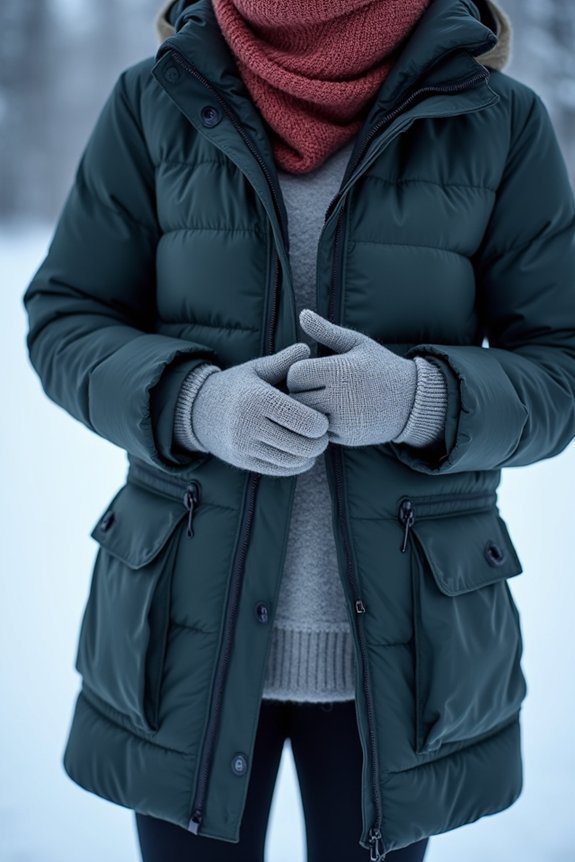
When wind picks up or moisture creeps in, staying comfortable means actively shedding or adding layers rather than toughing it out. Your body’s heat loss accelerates dramatically under those conditions. You’ll want to strip off a mid-layer before sweat builds up during intense movement, then throw it back on the moment you slow down or notice that wind chill biting harder.
Think of your layers as a conversation with the weather: constantly listen, adjust quickly, and never wait until you’re shivering to make a move.
Dynamic Layer Shedding Strategy
Since your body’s heat output changes dramatically between standing still and moving hard, you’ll want to start cold and build from there. This approach prevents the common mistakes that lead to discomfort on winter trips.
What I’ve learned about dynamic layer shedding:
- Shed layers before sweating happens to prevent moisture buildup and chilling
- Use venting features first: pit zips and adjustable cuffs manage heat without full removal
- Keep backup layers accessible for sudden temperature drops or emergency situations
- Increase layers when stationary to maintain core warmth during rest periods
- Monitor your temperature regulation continuously as activity levels shift
The key is recognizing when you’re warming up from exertion. I’ll remove my insulation layer before overheating kicks in, storing it where I can reach it quickly. This shedding strategy keeps me comfortable throughout dynamic winter activities, preventing that miserable sweat-and-chill cycle that ruins everything.
Wind Chill And Moisture Response
How quickly does your body lose heat in harsh conditions? Faster than you’d think, especially when wind chill and moisture team up against you.
Wind accelerates heat transfer dramatically, while wet skin conducts warmth away up to 25 times faster than dry skin. That’s why moisture management isn’t optional; it’s survival.
I prioritize wicking fabrics like polyester and nylon for my base layer. They pull sweat away from skin, keeping me dry when I’m working hard. Cotton gets abandoned because it traps moisture and turns into a heat-stealing liability.
Your mid and shell layers matter too. A waterproof outer shell stops wind and prevents moisture from saturating your insulation. Layer strategically, stay dry, and you’ll handle anything winter throws your way.
Essential Cold-Weather Accessories
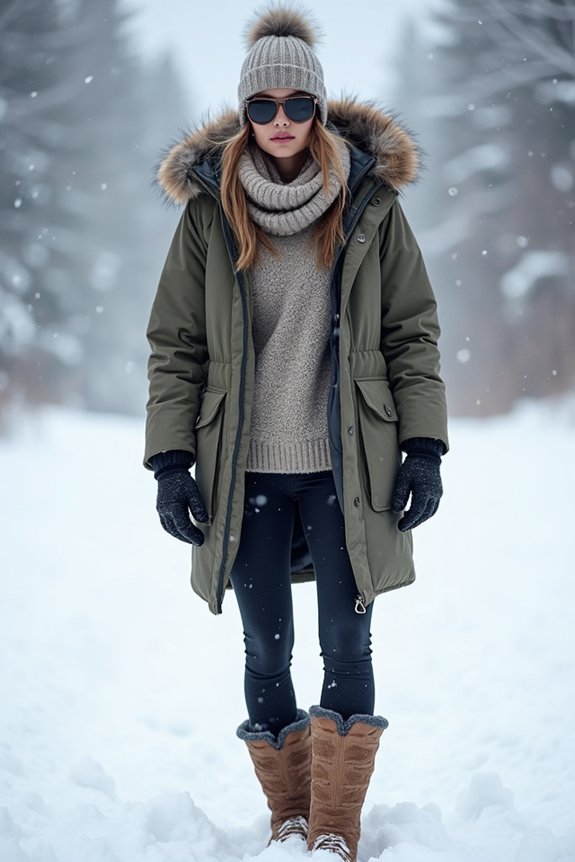
Why do most people freeze their extremities first? Your body prioritizes core warmth, abandoning fingers and toes to the cold. That’s why layering cold-weather accessories matters so much.
I’ve learned that proper gear separates comfortable outings from miserable ones:
- Warm hat or beanie (prevents significant heat loss from your head)
- Waterproof gloves or mittens (Arc’teryx Fission Mittens offer quick hand-warming capability)
- Merino wool socks (excellent moisture management and insulation when wet)
- Insulated boots (combine two sock layers for maximum warmth)
- Neck gaiter or scarf (protects your throat and face from wind)
These accessories work together through smart moisture management. When you’re layering, breathable materials like merino wool prevent sweat buildup that dampens insulation. Your cold-weather accessories aren’t extras. They’re your frontline defense against the freeze.
Adjust Layers Without Overheating or Freezing
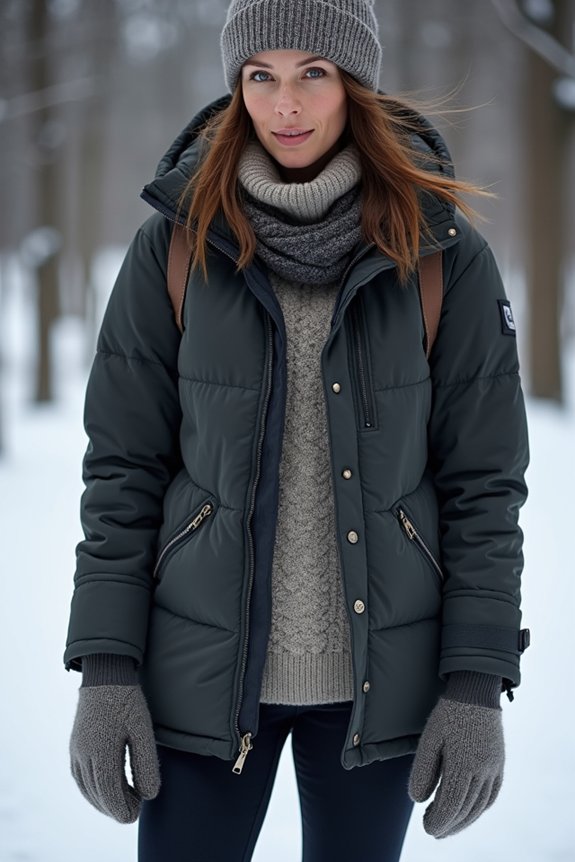
You’ve got your accessories locked down, but here’s what I’ve discovered: having the right gear means nothing if you’re sweating through your base layer or shivering because you stripped off too much.
The trick? Start cold and adjust dynamically. I begin every winter outing underdressed, then add layers as my body warms. This prevents that miserable moment when sweat chills you later.
Use ventilation strategically. Instead of removing your insulating mid-layer entirely, I crack open pit zippers or roll up sleeves. This releases heat without losing core warmth.
Remove your base layer last; it’s your foundation. Small increments matter too. A single lightweight layer added or subtracted keeps your temperature stable without dramatic swings.
You’re not just dressing. You’re managing your body’s response throughout activity.
Fueling Your Cold-Weather Activity
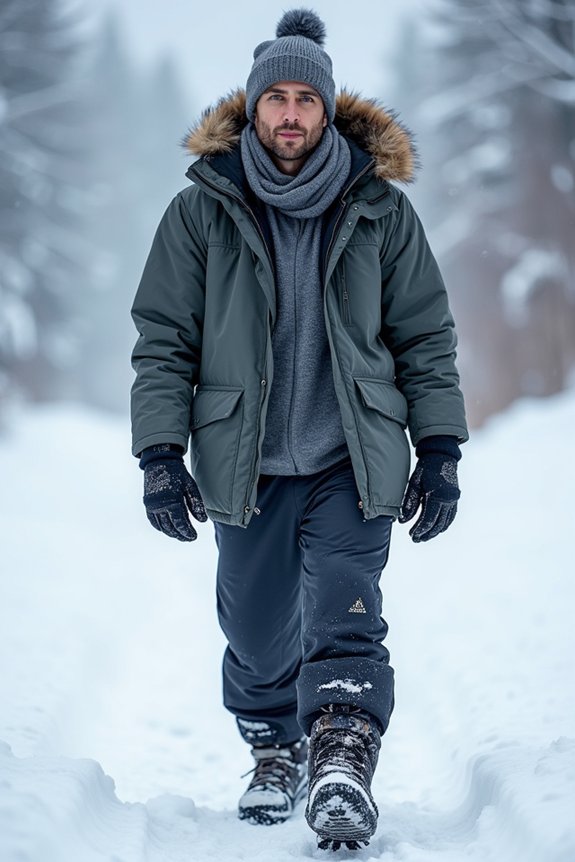
When you’re out in freezing conditions, your body burns calories rapidly to stay warm. You need to eat more than you might initially think. Skipping this step causes your performance to decline quickly. Pack high-calorie snacks that combine carbs, protein, and fat. Eat small amounts every hour to maintain steady energy and body heat.
Hydration matters as much as food intake. Bring an insulated bottle of warm fluids with you. Avoid alcohol entirely, since it lowers your core temperature and causes faster dehydration.
Caloric Needs In Cold
Because your body’s working overtime in freezing temperatures, you’ll burn considerably more calories than you would during the same activity in mild weather. Your caloric needs increase significantly when layering up and fighting the cold.
What you need to know:
- Pack 200-300 calorie snacks to eat every hour
- Choose nutrient-dense foods with carbs, protein, and fats
- Consume warm meals to maintain core temperature and insulation
- Drink warm fluids regularly to prevent dehydration
- Avoid alcohol, which reduces your body heat quickly
Skipping meals in cold weather drains your energy and compromises your insulation system. Your muscles need fuel to generate warmth. Think of food as another layer protecting you from the elements. Stay fueled, stay warm, stay strong out there.
Hydration And Warm Fluids
How often do I find myself forgetting to drink water on a frigid day? Too often, honestly. Cold weather tricks us; we don’t feel thirsty, yet our bodies desperately need hydration. Here’s what I’ve learned: warm fluids are an effective tactic.
I pack an insulated bottle filled with hot tea, broth, or cocoa. These drinks serve three purposes: they rehydrate you, warm your core from inside, and boost morale when temperatures plummet. I sip every thirty minutes, not waiting until I’m parched.
Why does this matter? Dehydration impairs your body’s heat-regulation system, making you colder faster. Warm fluids also provide psychological comfort. That momentary warmth feels remarkable when you’re shivering.
Stay ahead of thirst. Drink consistently. Your future self will thank you when you’re still performing strong.
Avoid These 5 Layering Mistakes
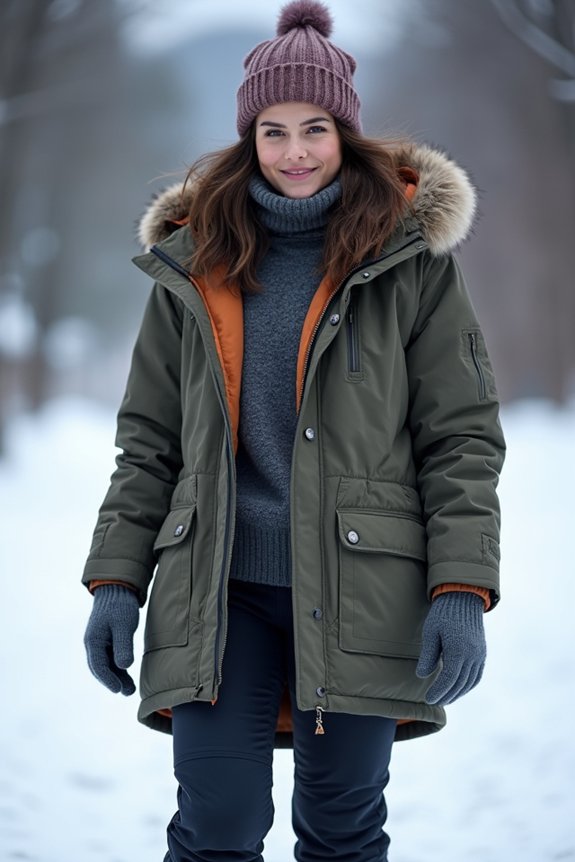
Why do so many people shiver through winter despite bundling up? I’ve learned that layering mistakes sabotage even the best intentions. After years of trial and error, I’ve discovered what separates comfortable adventurers from miserable ones.
The five layering mistakes to avoid:
- Choosing cotton for your base layer instead of merino wool or synthetics
- Skipping the mid-layer, which leaves dangerous gaps in heat retention
- Wearing an outer shell that traps sweat and causes overheating
- Adding too many layers at once, restricting movement and circulation
- Neglecting to shed layers during activity, leading to dangerous moisture buildup
I’ve been there. That cotton base layer felt right initially but wicked nothing away from my skin. My outer shell became a sauna. You don’t need perfection. Just make smart choices that keep you warm, dry, and actually comfortable.
Build a Budget-Friendly Cold-Weather System
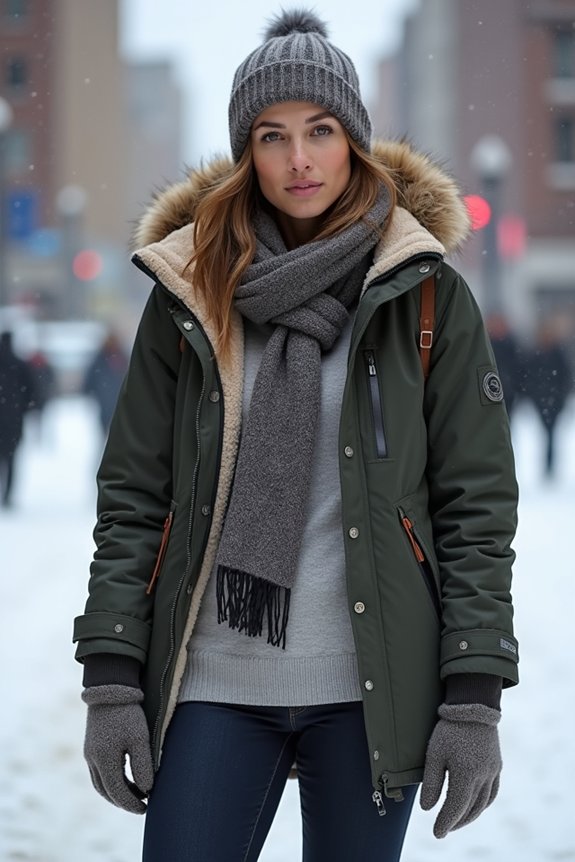
Most people think staying warm on a budget means choosing between comfort and cost. It doesn’t. I’ve built effective cold-weather systems for under $200 by prioritizing smart layering choices.
Start with a budget base layer from Costco or similar retailers. Merino wool long underwear delivers serious moisture management without premium prices. Skip cotton entirely; it will fail you in freezing conditions.
Next, add an insulating mid-layer like fleece or an affordable synthetic puffy. Synthetic insulation actually works better on a budget because it stays warm even when damp, which matters for mixed weather.
Finally, invest in one solid waterproof shell. This protects everything underneath and extends your whole system’s lifespan.
Layer dynamically by starting cold and adjusting as you move. You’ll stay comfortable, save money, and join countless others who’ve ditched expensive gear for intelligent layering strategy.
Your Winter Layering Checklist
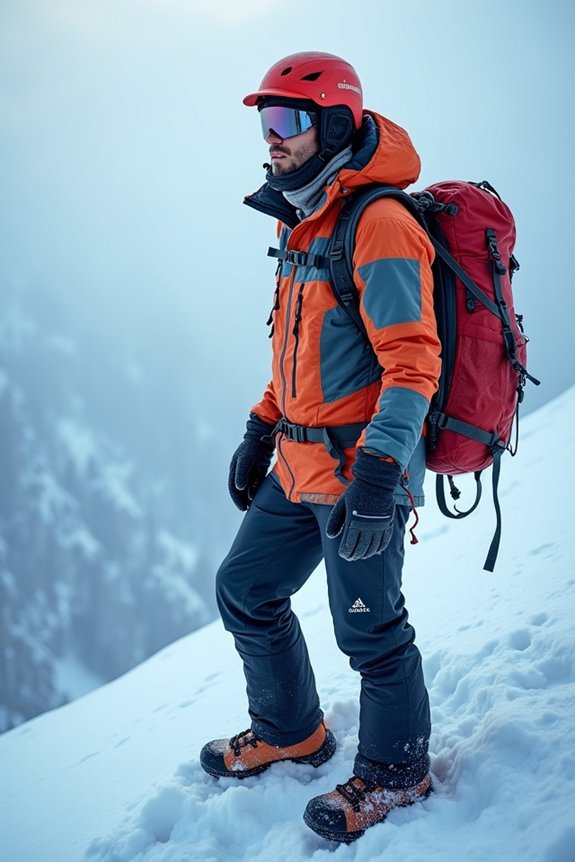
When you’re standing outside in freezing weather, you have seconds to feel comfortable or miserable. The difference comes down to what you’re actually wearing.
I’ve learned that layering isn’t complicated; it’s strategic. You need the right pieces working together, and I’m going to walk you through exactly what that looks like.
Your essential winter checklist:
Base layers, mid layers, outer shell, and accessories—the strategic combination that transforms winter from miserable to manageable.
- Base layers (synthetic or wool) that wick moisture away immediately
- Mid layers (fleece or lightweight puffies) that trap your body heat effectively
- Outer shell (waterproof, windproof, breathable) protecting everything underneath
- Hat, gloves, and extra socks for quick adjustments
- Emergency insulation backup for unexpected temperature drops
This combination keeps you dry, warm, and adaptable. You’ll stay comfortable whether you’re moving fast or standing still. That’s what separates people who dread winter from those who actually enjoy it.