
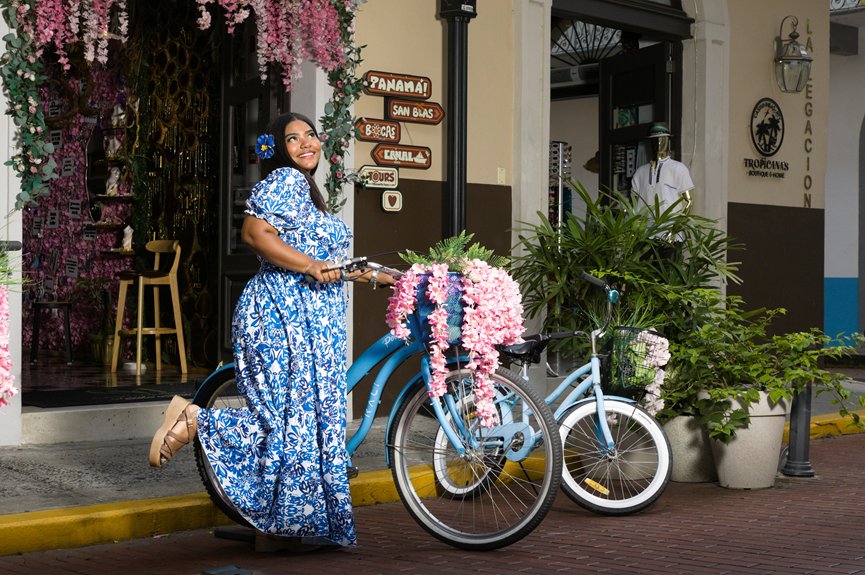
Authentic Hawaiian style focuses on quality fabrics, intentional choices, and cultural respect rather than loud prints. Start with locally made aloha shirts in silk or cotton that feature subdued patterns. Pair these with neutral shorts or linen pants to keep the shirt as your focal point. Complete the look with simple sandals around $20, wooden buttons, and matching pocket details. Avoid polyester and flashy logos entirely. These decisions support local artisans while elevating casual resort wear into something sophisticated.
Beyond these basics, there is more to learn about event-specific styling and outdoor adventures.
Master Aloha Shirt Selection and Styling
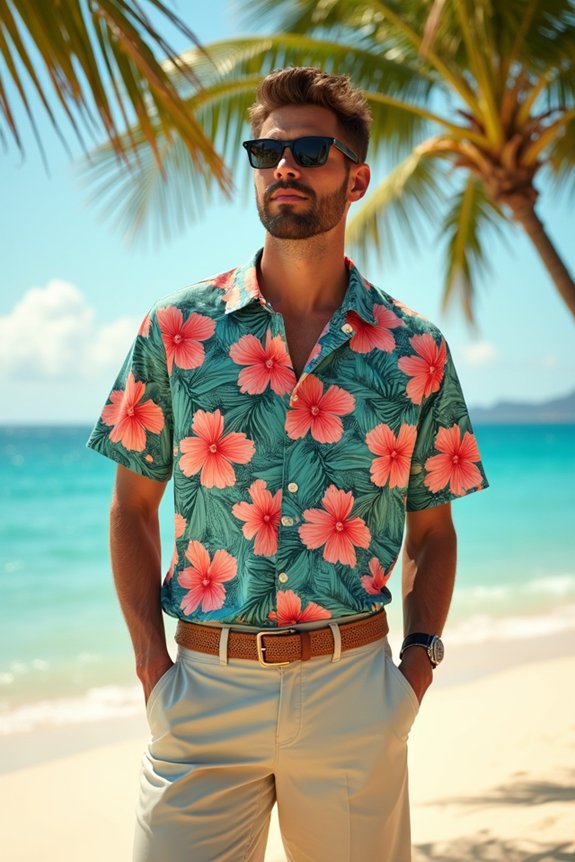
When you’re building a Hawaiian wardrobe, the aloha shirt becomes your foundation. Selecting quality matters. Look for locally made pieces in silk or cotton; these breathable fabrics feel authentic and last longer than polyester alternatives. Choose subdued floral or geometric patterns instead of loud graphics. Your shirt should speak elegantly, not shout. Seek pockets matching the pattern with wooden buttons for cohesive design.
Styling requires equal attention. Wear it loose and untucked, pairing it with neutral shorts or pants so the shirt remains your focal point. This smart-casual approach works everywhere: casual outings, semi-formal settings, and everyday wear. When you prioritize locally made shirts, you’re not just dressing well. You’re joining a community that values craftsmanship and tradition. That connection affects how you wear it and how you feel wearing it.
Choose the Right Shorts and Linen Pants
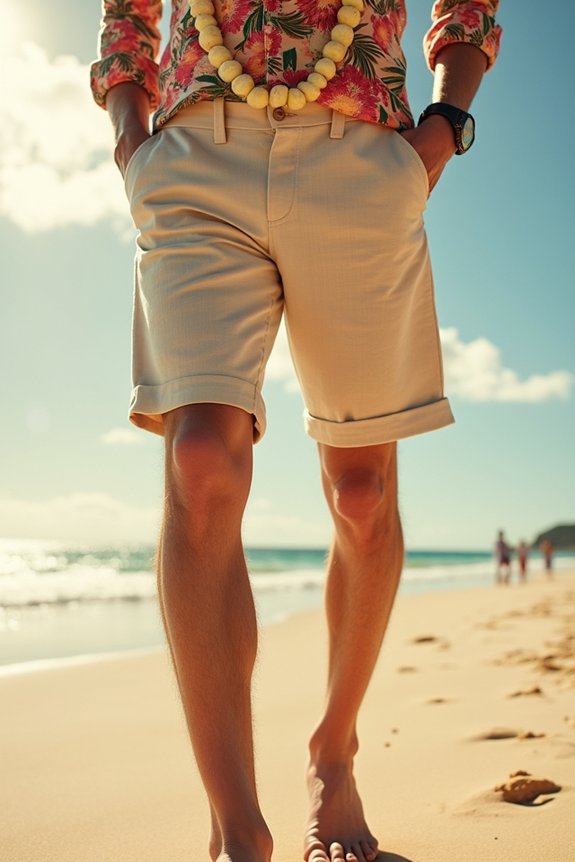
Your bottoms matter just as much as your shirt, perhaps even more, since they anchor your entire look. Pairing aloha shirts with the right shorts and linen pants significantly affects your overall aesthetic.
Neutral-colored, knee-length shorts in solid tones ground bold patterns well. Loose-fitting linen pants or stylish travel chinos work across day and evening activities. These breathable fabrics keep you comfortable in Hawaii’s warm climate without sacrificing style.
Board shorts suit beach days, but pair them with understated pieces to keep your aloha shirt as the focal point. Avoid ultra-short shorts or loud patterns that clash with your shirt. The fit matters considerably. Comfort and breathable materials ensure you actually enjoy wearing what you’ve packed.
Keep Patterns Simple: The Core of Hawaiian Style
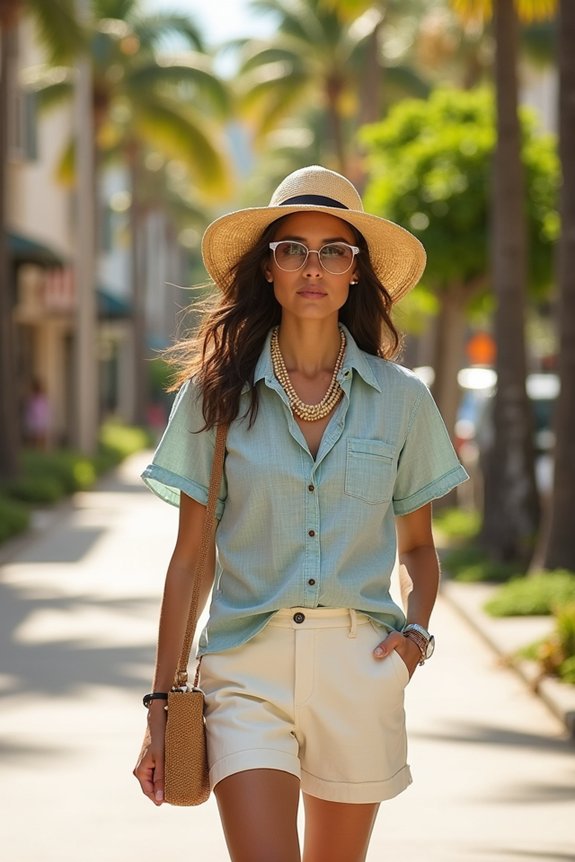
Instead, seek breathable fabrics like silk or cotton that drape cleanly and align patterns beautifully. Polyester looks cheap and feels worse. When you pair patterned aloha shirts with neutral shorts or pants, the shirt becomes your focal point, not a distraction. Details matter too: wooden buttons and strategically aligned pockets signal intention and cohesion.
This approach takes casual resort wear into something authentically local-friendly and sophisticated.
Pick Sandals That Blend Into Local Culture
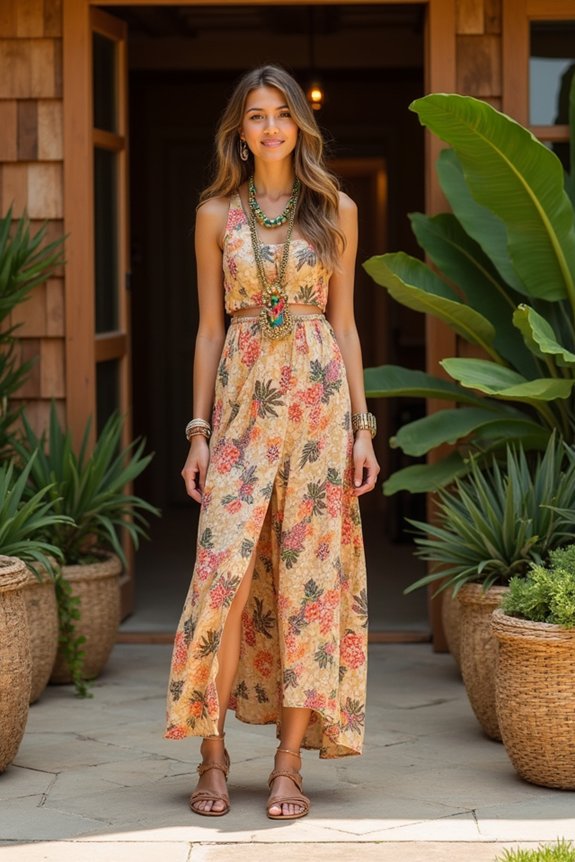
Once you’ve nailed your shirt and shorts, your footwear completes the whole look. Sandals aren’t an afterthought; they’re essential to blending into local aesthetics. Skip the designer labels and flashy brands. Instead, grab simple slip-on sandals around $20, made from durable plastic or rubber. They’re practical, unpretentious, and exactly what you’ll see locals wearing daily. If you want to upgrade slightly, Rainbow Sandals at $40–$60 offer soft leather and exceptional comfort that conforms to your feet beautifully. The key is choosing comfort over status. Plain, understated sandals work perfectly for beaches, pools, and casual outings. You’re not trying to impress; you’re fitting in. Locals notice when you respect the island’s relaxed vibe through your choices.
Avoid These Common Tourist Mistakes

I’ve learned that the biggest giveaway of a tourist is wearing those loud aloha shirts with hula girls or surfboards; locals actually prefer subtle, quality prints or solid colors. You’ll also want to skip anything that literally says “Hawaii” on it, since that screams visitor just like wearing an “I Heart NY” shirt would in Manhattan. Finally, keep your footwear casual with flip-flops or sandals, and whatever you do, don’t pair white tennis shoes with socks, because that combination marks you as someone who doesn’t understand island life.
Loud Aloha Shirt Patterns
Why do so many visitors show up in neon hibiscus shirts with surfboards splashed across the chest? I’ll tell you: it screams tourist immediately. Locals aren’t wearing those loud aloha shirts, and honestly, you don’t want to either.
Here’s what I’ve learned: understated patterns work better. Think subtle florals or simple geometric designs instead. Skip anything with “Hawaii” printed on it or clichéd logos. Those patterns don’t fit island style at all.
When you’re shopping, look for silk or cotton aloha shirts with matching pattern pockets and wooden buttons. Wear them loose, never tucked in, paired with solid neutral shorts. This approach keeps the focus on quality craftsmanship rather than drawing unnecessary attention.
You’ll blend in naturally. That’s the goal.
Tourist-Branded Clothing Items
The moment you pull on a shirt that screams “I ❤ Hawaii” or features a surfboard with your resort’s name plastered across it, you’ve already signaled to everyone around you that you’re visiting. Those bold logos and mass-market souvenirs scream inauthentic from a mile away.
I learned this the hard way. Locals spot tourist-branded items instantly. They’re designed for airport gift shops, not genuine island living. Skip the graphic tees entirely. Instead, choose neutral colors, simple designs, and quality fabrics that blend smoothly into everyday local style.
Your clothing should whisper, not shout. When you dress with intention, without relying on obvious tourist merchandise, you’re actually showing respect for Hawaiian culture. That’s when you truly belong.
Inappropriate Footwear Choices
Your footwear choices matter just as much as your shirt, and I see visitors make the same mistakes repeatedly. Here’s what I’d avoid: chunky white sneakers scream haole tourist, and locals notice immediately. Skip socks with sandals entirely; that combination signals you’re unfamiliar with island culture. Don’t pack heels or formal dress shoes, as they’re impractical and conspicuous on beaches and trails.
Instead, embrace versatile options. Lightweight sandals work for casual days, while water-friendly sneakers handle activities smoothly. Choose understated footwear that blends naturally with your aloha shirt rather than competing for attention. Think about function over fashion. You’re navigating volcanic terrain, not a city sidewalk.
Your feet guide your entire island experience. When your footwear respects local sensibilities, you’ll feel integrated into the community rather than like you’re performing tourism.
Aloha Attire for Weddings, Luaus, and Dinners
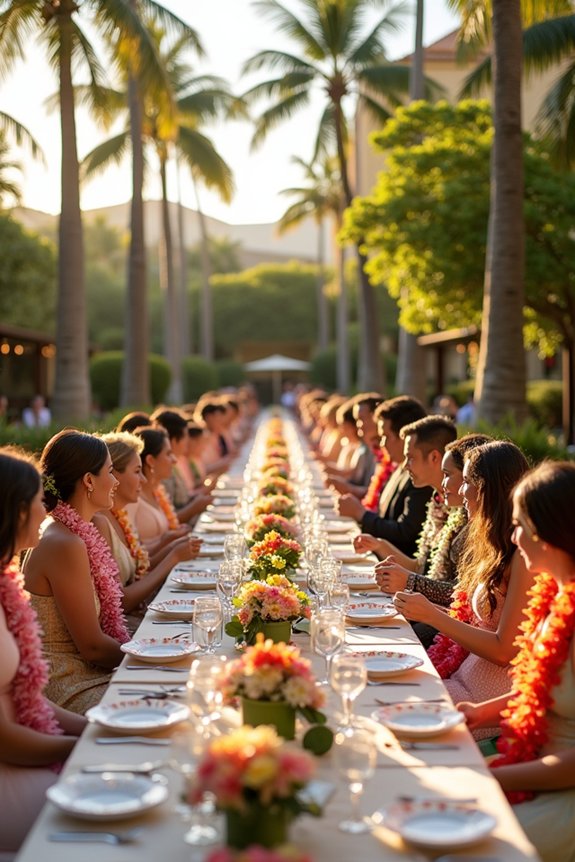
Dressing for Hawaiian celebrations requires understanding how formality levels shape your choices. Whether you’re attending a beachside wedding, a casual luau, or an elegant dinner, the key is finding the balance between respecting the islands’ relaxed spirit and looking put-together.
Each occasion calls for specific dress codes and outfit combinations. A beachside wedding typically allows for lighter fabrics and barefoot elegance, while a formal luau may require more structured pieces. An upscale dinner calls for polish without sacrificing the tropical ease that defines island style.
The approach works across all three settings: choose natural materials that breathe in warm climates, incorporate traditional Hawaiian prints or colors when appropriate, and select footwear that matches the venue’s formality. This method helps you navigate different events with confidence and respect for the occasion’s expectations.
Wedding Dress Code Essentials
How do you strike that perfect balance between relaxed and refined when you’re heading to a Hawaiian wedding or luau? Semi-formal aloha attire is your answer.
Women look polished in floral dresses with subtle patterns, while men excel in quality aloha shirts paired with tasteful pants or shorts. The key is choosing subdued designs over loud prints. Cotton or linen fabrics work best since they breathe well in Hawaii’s warmth.
Avoid matching outfits with others; authenticity matters here. Pair your ensemble with dressy sandals rather than chunky sneakers. Add simple jewelry and perhaps a lightweight wrap for finishing touches.
This approach keeps you aligned with the island community while honoring the occasion’s significance. That’s genuine aloha style.
Luau Outfit Ideas
Now that you’ve got the semi-formal wedding basics down, let’s explore the specific outfit combinations that will work well at an actual luau. Nailing your aloha look means balancing comfort with polish. For women, I recommend floral dresses or two-piece sets with breezy skirts that move beautifully in warm weather. Men look sharp in aloha shirts paired with linen pants or tasteful shorts. What separates good outfits from great ones comes down to choosing pieces that pop against tropical backdrops while staying respectful. Pair your luau attire with platform sandals for comfort and balance. Add a straw bag and minimal jewelry to complete your ensemble. You’ll feel confident, belong in the moment, and honor local aesthetics authentically.
Dinner Attire Guidelines
When heading to a Hawaiian dinner, whether at an upscale restaurant in Honolulu or a beachfront celebration, aloha attire strikes the right balance between relaxed and refined.
For women, floral dresses in midi or maxi lengths work well, offering elegance while honoring island traditions. Men should pair aloha shirts with loose-fitting pants or tasteful shorts for polished casual wear.
Footwear deserves attention. Platform or faux leather sandals keep you comfortable throughout dinner. A light cardigan or shawl is practical; ocean breezes can cool things down as the evening progresses.
Complete the outfit with simple jewelry and a straw bag that complements rather than overwhelms. Select pieces that coordinate with tropical backdrops while reflecting your personal style.
What to Wear Hiking, Snorkeling, and Island Adventures
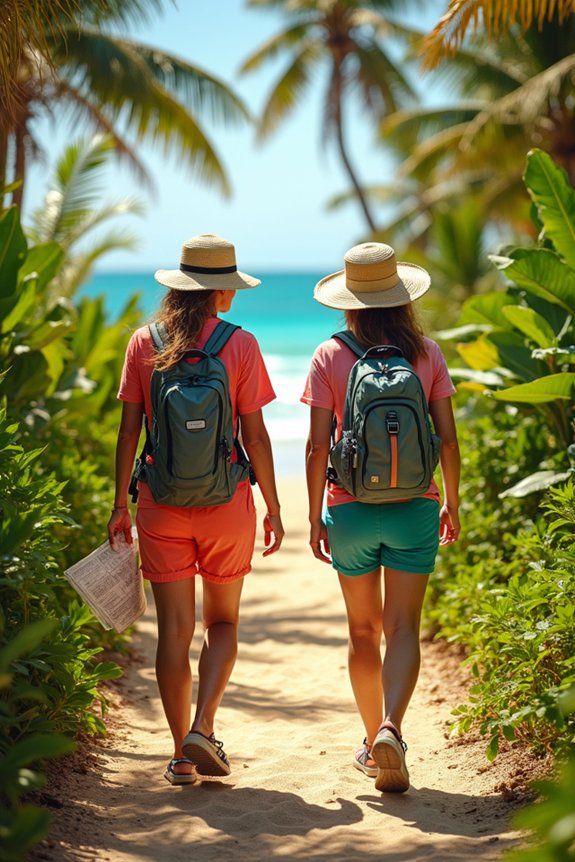
Why do so many visitors show up to Hawaiian trails in cotton jeans and flip-flops? I’ve seen it countless times, and I’m here to help you avoid that mistake.
For hiking, I wear moisture-wicking athletic tops and sturdy closed-toe shoes with excellent traction. Slippery volcanic rock demands real footwear. Pack a lightweight windbreaker because weather shifts fast up there.
Snorkeling requires different thinking. I use a rash guard for sun protection and secure swimwear with proper support. Water-friendly footwear matters when exiting rocky areas safely.
Here’s my golden rule: choose quick-dry fabrics and breathable layers. A lightweight dress works well; it transitions from beach to town without extra effort. Add sunglasses with UV protection and sunscreen, and you’re ready for whatever adventure calls you next.
Shop Like a Local: Supporting Hawaiian Culture
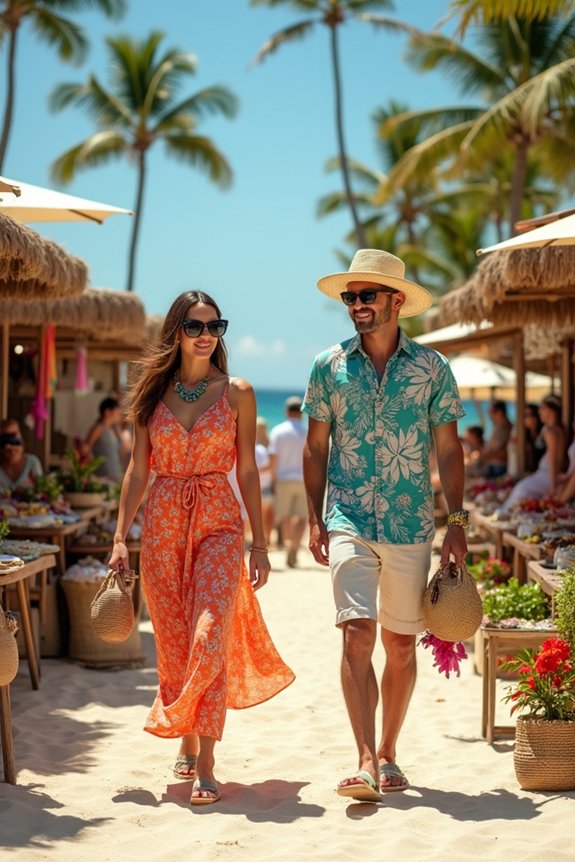
Shopping for authentic Hawaiian style means supporting the artisans and small businesses that keep island culture alive. Locally made aloha attire tells real stories; families craft traditions into fabric and design.
Visit small boutiques where you’ll discover authentic pareos and sarongs reflecting genuine island aesthetics. Look for subdued floral patterns on cotton or linen, not loud logos screaming tourist traps. I always check pockets and buttons. Matching fabric patterns and wooden buttons signal quality craftsmanship.
When you choose Hawaiian aesthetics intentionally, you’re joining something meaningful. You’re saying: “I respect this culture.” These artisans depend on customers like us who understand the difference between costume and authentic aloha attire.
That’s where true island style begins: with intention and respect.